February 4th, 2010
Checking your starting system on your vehicle
One of the most common problems on vehicles is that they simply will not start. There are several different factors that can affect whether or not your vehicle will start. In this article we will discuss some simple tests that will allow you to test your entire starting system. This will help you save money and do it yourself.
Ok, the only real tool that you are going to need to test your starting system is a simple multimeter. You can use a simple multimeter such as this ATD5536 Digital Multimeter or as advanced as this FLU885 Fluke 88 Multimeter. Either one of these meters will work to properly check your starting system.
The Procedure
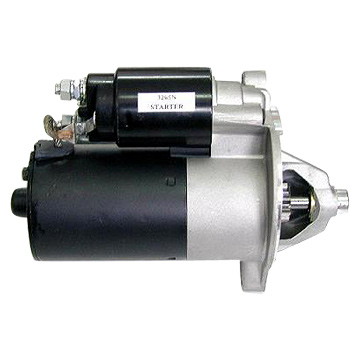
- The first thing that you are going to test will be your battery. This is the simplest thing to test. To do so you will simply need to take your multimeter and switch it to DC Voltage. Once you have your meter ready you are ready to disable the fuel system. To do so you will want to remove the fuse for the fuel pump, this will prevent the car from starting when you crank the engine. You will then want to take the red lead from your meter and place on the positive post of the battery, and then take the other lead and place on the negative post of the battery. Then crank the engine and record your reading on a piece of paper. Next you will want to test the starter, so you will want to connect your meter on the same setting across your starter. You will want to connect to where the positive battery cable is attached to the metal frame of the starter. If the reading is 0.5 volts or more different from the battery you are going to want to continue on and do the next tests. If not then the starting system is in good operating condition.
- Assuming that your test has failed on the first one, so we will go onto testing the next thing in line. This test is for testing to see if your batter clamps are corroded. To do so you will again switch to DC Voltage and have the engine cranking, and place the red lead on the positive post of the battery, then take the black one and place it on the battery clamp you will have to crank the engine over while touching the posts. There should not be anything more than 0.2-0.3 Volts showing on your meter. Do this same test for the other battery clamp. If you do have more than the above voltage you will need to remove and clean your battery clamps. You can use a wire brush such as this ATD8239 Wire Brush. After you clean the clamps you will want to retest and if they pass, then you will want to do the first test again and make sure. If they fail you will want to move onto the next step.
- After testing your battery clamps, we can move onto each of your battery cables. Again to test these you will have to have your vehicle cranking. To do this test you are going to have to follow your positive battery cable until it reaches the starter. Have a helper hold the one lead of your meter on the positive post of the battery, and then you place the other lead on the end connected to the starter motor. You will then switch to DC Voltage again and you should not more than 0.2 Volts on your meter. You will then want to do the same test for your negative battery cable, following it. If any of your cables have more Volts than the above, you are going to want to replace them.
- Once you have tested, and or replaced the battery cables, you are now ready to move onto testing your starting circuit. You are going to want either jack the front of the vehicle up and place it on jack stands, or if you can crawl under it do so. If you need a jack and jack stands this ATD7333 Service Jack and ATD7443 Jack Stands will work. Once you are under your vehicle you are going to want to locate your starter. Then you will want to take and place your positive lead on the post on the starter where the positive battery cable is connected, then take the negative and go to the ground post straight below that post. This is testing the starter solenoid; you do not want to have more than 1 volt on the meter. If you have more than 1 volt your starter has high resistance and you will need to remove it and take it to a shop and either have them overhaul your starter, or simply buy a new one.
After doing all of these tests your starting system should be working in your vehicle. It should also help you save some money because you will not have to take your vehicle to the repair shop and get stuck with an expensive repair bill.
Written by: Cody Mammenga an NDSCS Student.
Tags: battery, car starter, car won't start, starter, starters, starting system
Posted in How can I check my starting system in my vehicle, because my car won't start? | No Comments »
January 28th, 2010
Changing the fluid in your differential.
To change the fluid in your differential is a fairly simple task. It is recommended to change the fluid at the intervals recommended by your owner’s manual. It is extremely important that you change your differential fluid. The differential is always spinning with your tires, and it is under extreme force and heat constantly. The fluid breaks down over time, and also gets filled with little metal shavings. You do not want these floating around in your differential so it is recommended that you change it.
Before starting the procedure you are first going to want to consult your service manual or local mechanic and ask what fluid is recommended for your specific application. Also you will want to MAKE SURE TO ask if you have a limited slip differential. If your specific application does you will need to add a friction additive to prevent the clutch discs in your differential from making noise and prematurely wearing. Before you go out and purchase the proper fluid and if you need it friction additive, you will want to also get some RTV sealant to seal your differential up. Once you have all of the materials gathered up you are ready to start the project.
The Procedure
- First you will want to park your vehicle in the drive way where it can sit for a couple of hours.
- Now that you have the vehicle parked you will want to take and put blocks in front of the front wheels. I am assuming that you are doing the rear differential first, and if you have a 4X4 make sure to do both the front and rear differentials.
- Next you will want to take a jack and jack the rear of the vehicle up. Take and place the rear axle or the frame on jack stands. If you do not have a jack or jack stands this ATD7333 Service Jack and ATD7443 Jack Stands will work.
- You will want to take and place some newspaper on the ground below your differential. Then you will want to take and place a drain pan such as this LIS17942 Drain Pan underneath your differential.
- Now that you have everything under you differential to catch the fluid you are going to want to start taking the bolts out one at a time. Make sure to leave the top bolt in. This will hold the cover on and let the fluid drain. This socket set ATD1380 Socket Set will work to remove the bolts.
- With all of the bolts removed except the top bolt you can now take a screwdriver and pry underneath the bottom of the cover. Keep prying until it pops up and fluid runs out into your drain pan. This ATD6206 Long Screwdriver will work.
- Once the fluid stops running out you can remove the last bolt and remove the cover. Take some rags and wipe out the excess fluid in the differential case.
- After you have wiped all of the excess fluid out of the case, you can move onto cleaning the cover. Use brake cleaner and a gasket scraper to scrape the old gasket material off. Make sure to not scratch the gasket surface. If you do not have a gasket scraper this ATD8426-5-pc Scraper will work to remove the old gasket.
- With all surfaces cleaned you are ready to reinstall the cover. Place a thin bead of RTV sealant all the way around the gasket surface where the cover will bolt on. Make sure to loop around each bolt hole. You only need a thin constant bead, do not put excess sealant on it is not needed.
- Now that you have the RTV sealant on the gasket surface, place the cover over the differential. Make sure to not slide the cover around. Hold it in place and screw in a couple of bolts. Then hand tighten all of the bolts in place.
- With all of the bolts hand tight, tighten them down using a torque wrench. This ATD103 Torque Wrench will work. Tighten them to the proper torque recommended by your manufacturer.
- You will now need to let your differential sit for an hour or so to give the sealant some time to dry.
- After your hour of waiting, you are ready to add fluid. To start you are going to need your vehicle level, so remove it from the jack and jack stands. You will then want to remove the fill hole. Take your fluid and add until it comes running out. IF YOU HAVE TO ADD FRICTION ADDITIVE you will want to fill until it is ½ of an inch below the hole, and then add the proper amount of friction additive.
You just finished changing your differential fluid. You will want to further let it sit and dry for a couple of hours, and then you are ready to take it out for a drive. When you get back, check and make sure the differential is not leaking.
Written by: Cody Mammenga an NDSCS Student
Tags: changing fluid in differential, differential, differential maitenance, differentials, friction additive, gear lube, limited slip differential
Posted in Replacing your differnetial fluid | No Comments »
January 22nd, 2010
Working on hybrid vehicles
With the new trend in vehicles being better mpgs, it is eminent that there will be more hybrid vehicles. These vehicles are similar to regular vehicles, but they do however require some extra caution and special tools to work on them.
The main problem with hybrid vehicles is that a lot of shops do not know how to correctly work on them. This article will be aimed more for the shop, or the backyard mechanic who really knows what they are doing. When it comes to hybrids SAFETY is number one. These vehicles use extremely high voltage to run their electric motors. This is what makes knowing what you are doing extremely vital, or else you could end up hurt or worse dead.
There are a couple safety items that we must understand before I get into some of the tools needed to work on hybrid vehicles. First on every hybrid vehicle orange wires signify high voltage. These mean that they are extremely dangerous. Next, when you are working on a hybrid make sure to have the key out of the ignition in your pocket. This will prevent extremely high voltages from entering your body.
Now that we understand the safety items, we will now discuss what tools we need to accomplish these tasks. First you need to invest in a set of rubber gloves rated to 1000 plus volts. It is recommended that you get these gloves checked every 6 months. You are also going to want to invest in a rubber apron, to help keep high voltage away from your body. Another thing that you are going to want to invest in for safety reasons is a face shield. These are the safety tools that you are going to want to invest in. It is a good idea to invest in a good set of hand tools that have rubber handles to further protect yourself from electrocution do to high voltage on your metal tools. You will also want to invest in a special multimeter capable of reading high voltages such as 1000V CAT III Hybrid Multimeter . This multimeter will allow you to test up to 1000 volts. It also has a special insulator test that will let you test the insulation on high voltage wires on the hybrid vehicles. This will help provide safety for you by letting you know if high voltage wires are exposed.
After talking about the tools needed we can now discuss some special things that apply to hybrid vehicles. The first topic is changing oil. This is fairly simple task, but it can go wrong and cause severe damage to the car. To help prevent this it is recommended that you take the keys and put them in your pocket. This will prevent the car from accidently being turned on, and the electric motor needing a charge and starting the gasoline engine while you are draining oil, causing severe engine damage. The next topic is changing the brake pads. This is a really touchy subject. This is because the brake pads are special pads for electric systems. They are extremely expensive. The other problem with changing brake pads is that some of the systems use the brakes to charge their batteries. To prevent the brake caliper from accidently crushing your hand while it is off of the car, it is recommended that you follow the proper procedures for disabling the system. Another good idea is to have the car keys in your pockets at all time while you are working on the vehicle.
This article is very general and basic, but I hope that it gives you a little understanding of what working on hybrid vehicles involves. The main thing that we must understand when working on hybrid vehicles is the fact that they run extremely high voltages to charge their batteries. When working on these vehicles we must take extreme caution to not accidentally get shocked.
I hope this article helps people understand some of the basics. I will try to update with some more advanced hybrid information.
Written by: Cody Mammenga an NDSCS Student
Tags: electric cars, electric engines, hybrid tools, hybrid vehicle, Hybrid Vehicles, Tools, woking on hybrids
Posted in Hybrid Vehicles | No Comments »
January 13th, 2010
How can I replace worn out U joints on my vehicle?
In order to understand how to replace worn out u joints, we first must understand what a u joint does. A u joint is on rear wheel drive vehicle’s driveshaft. They allow the driveshaft ends to move along with the suspension movements. There are usually u joints on the end of the driveshaft that bolts to the rear axle, and then to the end that slides into the transmission.
Some signs of worn out u joints, are clunking noises when you shift into gear with your vehicle. Another sign can be a vibration or noise coming from the rear of your vehicle.
Once you have diagnosed that you have worn u joints, you will want to first understand that this task can be very difficult if you do not do it correctly. This procedure will hopefully help you to not encounter some of the troubles that can happen when replacing you’re worn out u joints.
The Procedure
- The first thing that you will want to do is make sure you can park your car for a couple of hours. Before jacking your vehicle up make sure to block the front wheels. Once your car is parked you will want to jack it up and place at least the back end on jack stands. If you do not have a jack and jack stands these ATD7333 2 1/2 Ton Jack and ATD7443 3 ton Jack Stands will work.
- Now you are ready to crawl underneath your vehicle and remove the drive shaft. In order to remove the drive shaft you will first want to take a sharp object or a flat screwdriver and mark where the drive shaft bolts up on the rear end so you have alignment marks to put it back in the correct location. This is key, since driveshafts are balanced.
- With your driveshaft marked and ready to remove you are going to need to use an impact wrench and the correct sized socket to remove the bolts. If you do not have an impact you can use a normal ratchet. This ATD 1/2″ Impact Wrench will work well.
- Once you have all the bolts removed your drive shaft should slip down, and this will allow you to pull the splined end from the transmission. With the drive shaft removed you will want to take a plastic bag and rubber bands to place over where you removed the splined end from. This prevents the leaking out of transmission fluid.
- Now you are going to want to take your drive shaft and find yourself a table mounted vise. If you do not have one this COLUMBIAN® 5″ Vise will work great.
- Make sure before you start removal that you mark the drive shaft and the yoke so you can put it together correctly. Next you are going to want to identify what is holding your u joint in place. You may either have a simple cap, or you may have clips. If you have caps you will want to heat area around the cap melting the rubber seal. If you have clips you are going to want to take a needle nose pliers such as this ATD 6″ Needle Nose Pliers and remove the clips.
- Once you have removed the caps or clips on all four ends you are ready to start removing the u joint. This next part is vital. You are going to want to place the yoke so that the U shaped end is parallel with the vise. Then take a hammer and gently pound down on the driveshaft, take care otherwise you can bend the ears of the yokes. If you don’t have a hammer this ATD 3LB CROSS PEIN HAMMER will work.
- Watch as you are pounding and make sure that the one cap is coming up. Once you have the cap all the way out, flip the drive shaft over and remove the other cap. Now you should have removed the driveshaft flange, and you should have a u joint with the drive shaft. You are going to do the same procedure to remove these caps, except you are going to place the ends of the u joint in the vise and pound down on the drive shaft removing both caps.
- Now that you have removed the caps on that end you can apply the same procedure to the transmission end.
- Now we are ready to install the new u joint. To do so you will want to take the new u joint and make sure to follow the instructions for the direction of installation. Then you will want to take the caps and put the needle bearings inside of the caps and make sure that you put grease around them to hold them in place. Then position your u joint in place and start to gently tap the cap down. Tap it until it is flush, then you will want to take and tap it in with a piece of metal tubing that fits inside the cap hole. Then pound it in past where the groove is for the clip.
- You can install the clip onto the side that you just pounded in. Then repeat the procedure for pounding in the other side cap.
- Note: if you u joint does not move freely place the ends in the vise and tap down on the driveshaft and then flip the drive shaft and tap on it to center the u joint.
- Continue with the other caps making sure to align the marks. Once you have all of the caps in place with the clips you are ready to reinstall your driveshaft.
- To do so, simply grease the splined end and reinstall it into the transmission. Then reinstall all bolts and make sure to align the drive shaft with your marks you made when you removed it.
You have now finished your u joint replacement. Your vehicle should shift into gear without making a clunk.
NOTE: Before installation make sure your u joints move freely, if not make sure to tap and center them until they move freely.
Written by: Cody Mammenga an NDSCS Student.
Tags: driveshaft, driveshaft service, replacing u joints, u joint, u joints
Posted in Replacing worn out u joints | No Comments »
January 1st, 2010
Installing a block heater in your vehicle.
With winter upon us all, and the temperatures reaching below zero it is a good time to look at installing a block heater in your vehicle. A block heater is vital to helping your vehicle easily start when the weather is cold. The reason a block heater is so helpful when starting your vehicle in the cold weather is the fact that it works like a little heater and heats your engines coolant up. This heating of the coolant helps warm the engine and everything attached to the engine. This allows your engine to be warmer, and helps keep your engine oil be thinner, making starting a lot easier.
There are two different kinds of block heaters available. The first is a magnetic kind that just attaches to the engine block. These work, but they do not work as well as the ones that actually go in one of your engines freeze plug holes. The problem with the magnetic ones are that your engine block has to be cast iron or the magnet will not stick, and also it is not on the inside of your engine warming the coolant from the inside. Instead the magnetic one needs to warm the outside of the engine. They both work well, and you may need the magnetic one depending on your vehicle. Before you go ahead and take this task on call and see which block heater will work for your application.
Once you have purchased your block heater, it should come with the cord, the element, and the plug. If you have the magnetic one you will just want to follow the instructions for locating the heater, and then it is just a matter of routing your cord through your engine bay and out to the front. If yours is one that goes in the place of a freeze plug, then these next instructions are what you are going to want to follow.
The Procedure
- Make sure that your engine has not been run recently and that your coolant is not hot. This is a safety matter, and will prevent you from getting burned when you install your new block heater.
- Next you will want to jack the front of your vehicle up and place it on jack stands. Here are a jack and jack stands if you do not have them, 2 1/2 Ton Jack and 1 Pair 3 ton Jack Stands.
- Now that your vehicle is in the air, locate your radiator drain plug. You will need a wrench to remove this. This ATD415 Crescent Wrench will work for this. Make sure to have a drain pan like this Lisle 17942 4.5 Gallon and place it underneath the drain plug.
- Once all of the coolant is drained from your radiator you will want to locate the freeze plug farthest back on your engine. Once you have found this you will need to use a big brass punch, this kit contains a good sized one ATD 3pc. Brass Punch Set , and a hammer such as this ATD 24 OZ BALL PEIN HAMMER. You will want to place the punch on one edge of the plug and drive it out so it comes out crooked. You do not want to drive it into the engine block. Once the plug is crooked you can take a plier such as this 10″ Slip Joint Pliers to grab the freeze plug and pull it out.
- Now that you have the old plug out you will want to take some emery cloth and sand the hole where the freeze plug goes. You do not want to have any rough spots because this can cause leaks. Once you have the hole smooth you will want to take a cloth and wipe it clean of all debris.
- You are now ready to install your new block heater. You will need to take some hi temp gasket maker and put a bead around the outside of the new heater plug. You are now ready to drive your block heater in place. First you need to remove the cord. You will then want to find a socket that fits just inside of the plug. If you do not have a socket that fits one from this SK 13 Pc. 3/8″ Socket Set should fit.
- Now position your heater in place with the socket and take your ATD 24 OZ BALL PEIN HAMMER and drive the heater in place. Make sure that your drive it in straight. You want to drive the heater in until the lip is just flush with the block.
- Once your new block heater is in place you can reinstall your cord. You will want to route your cord through your engine bay, making sure to stay away from hot areas like the exhaust. You can use zip ties to help guide the wire in place.
- Now that you have the cord routed to the front where you can access it you will want to reinstall your radiator drain plug and make sure to fill your radiator with a mix of 50/50 coolant to water.
- Let your engine sit for a couple of hours to allow the gasket maker to seal and dry. Then you can start your engine and check for leaks.
- Now enjoy the ease of starting your vehicle in cold weather with your new block heater.
Written by: Cody Mammenga an NDSCS Student
Tags: block heater, cold, cold starting, freeze plug, heat, heater, winter
Posted in Frequently asked questions | No Comments »
December 18th, 2009
How do I change my fuel filter in my car?
Changing the fuel filter in your vehicle can be easy, if you know what you are doing. This article will help you understand the correct process on how to properly install your new fuel filter in your vehicle. Make sure to follow ALL of the instructions, if you do not you may accidentally cause pressurized fuel to shoot everywhere causing an EXTREMELY dangerous situation. You do not want this to happen, so I have written this article to help you to accomplish this relatively simple task safely.
Now that we have discussed exactly why you should follow all of the instructions due to the safety of yourself, we will now go into the process of changing your fuel filter. I will try to make changing your fuel filter simple with this article, since it seems they always like to go in the winter. Hopefully this article will help you speed up the removal and installation of a new fuel filter.
The Procedure
- First you will want to park your vehicle in a location where it can sit for an hour or so.
- Next you will want to go purchase your new fuel filter for your vehicle. Note(some fuel filter’s require the use of special line tools, some may come with them in the kit, or you may have to purchase them separately)
- Before you start to remove your old fuel filter you MUST do this otherwise you risk the chance of pressurized fuel being sprayed everywhere. Most vehicles are fuel injected now days meaning that there fuel line pressure is much greater than the old carbureted engines. You will need to relieve this fuel pressure. To relieve the fuel pressure you will want to locate your fuel pump fuse or relay box. Once you have located this you will want to start your vehicle. With your vehicle running you will want to pull the fuel pump fuse. Your vehicle should die shortly, meaning that the fuel pressure is relieved.
- Now that you have relieved the fuel pressure from your lines, you will want to jack your vehicle up and place it on jack stands. If you do not have a jack or jack stands these will work great, ATD7333 2 1/2 Ton Jack and ATD7443 3 ton Jack Stands. Make sure you lift your vehicle on a piece of the frame or axle. Also make sure your jack stands are on sturdy level ground.
- Now locate your old fuel filter, it should be towards the back of the vehicle. Once you have located it make sure it is the same as the one that you purchased before.
- Ok now you are ready to start removing your old fuel filter. If you have the special connectors you will need to get a fuel line removal kit like this ATD 3399 15 Piece Disconnect kit. If you have the other style you will simply need open end wrenches like this ATD Tools 1550 17 Piece Combination Set.
- Now that you have your wrenches what you need to do is use them to remove the fuel lines. I will discuss how to do this with a system that uses connectors that open end wrenches will work on; the special removal tool kit will come with instructions. You will want to locate the two nut looking things on the fuel line. These are called banjo fittings. You will want to place one wrench on one of the nuts and one on the other. Then place a paper towel over the wrenches to prevent fuel from going all over you.
- Then turn the wrench furthest away from the fuel filter counter clockwise while holding the other wrench. This will separate the lines. Make sure to make a note of the washers on the fittings. These need to be replaced when you install your new fuel filter to help prevent leaks.
- Next you can remove your old fuel filter. Be careful, because it probably still has fuel left inside of it.
- Now you are ready to install your new fuel filter. You will want to make sure to replace those washers that I stated in step 8.
- Then position your new fuel filter in place. Note some fuel filters are in line filters, meaning that they will have a directional mark. MAKE SURE TO READ THE INSTRUCTIONS FOR THOSE FUEL FILTERS AND INSTALL WITH THE ARROW IN THE CORRECT DIRECTION.
- Now you are ready to reattach your fuel lines using the new washers.
- Reattach all of your fuel lines and make sure that you attach anything that held the fuel filter in place.
- You can then lower your vehicle down.
- Make sure before you try starting your vehicle that you place the fuel pump fuse back in place.
- Now you are ready to start your vehicle and it might take a couple seconds because your fuel lines are not pressurized.
- You are finished!
Now that you have finished installing your new fuel filter, you will want to try to install a new one every year or two. Your vehicle should run much better now that you have a new filter.
Written by: Cody Mammenga an NDSCS Student
Tags: car, fuel, fuel filter, gasoline, replacing fuel filter, Tools
Posted in Replacing your fuel filter | No Comments »
December 10th, 2009
Introducing the newest tool innovation on the market, the Mini ductor and the Mini ductor II.
When it comes to special tools the all new ACEMD600 Mini Ductor is among the greatest new tools out there on the market.
We are going to go into more details for those of you who do not know what the ACEMD600 Mini Ductor is. This tool is used for removing almost anything. With this tool you can remove stuck bolts, rusted bolts, bearings, stickers, car windows, metal bond adhesives, weather stripping, spray on bed liners, hail dents, vapor barriers, and even glued on body pieces. The new innovation will not only help the average do it yourselfer, but also people out in the job force working on cars or in collision centers. This tool is simple, and safe to use. It is by far the most effective tool at removing the above mentioned items, and even some uses that I have not listed.
The ACEMD600 Mini Ductor works by using inductive heat to heat up the object that you are looking to remove. This works because the ACEMD600 Mini Ductor uses coils that transfer the heat to the object that they are placed around. The nice thing about the coils is that it only transfers heat to the area in the coils, keeping the heat where you want it. The tool also works extremely fast at heating up the object. It takes only a mere twenty seconds to heat a stuck bolt head up to cherry red. This is quick, and even at this extreme heat the tool will allow you to only heat the object you want to instead of burning things up such as you would with a torch.
To use the ACEMD600 Mini Ductor is simple. First you take the correct sized coil for the task at hand. Each kit contains one coil for most standard sized bolts, a u coil that can be used to mold for special bolts, and a long coil that can be used to be wrapped around bearings for bearing removal, and this long coil will also allow you to do many tasks. If you need specialty coils such as ones for different sized bolts, or for removing body moldings then check this site out tooldesk if they do not have what you need, then check out the tool’s homepage at www.theinductor.com. Now that you have the correct size coil for your job all you do is simply place it around the stuck object. If you are removing a bearing wrap it around the outside to expand the metal holding it in, if you are removing a bolt or nut place it around the nut or bolt head. Then you simply hold the button on the machine and watch the object heat up. Let it heat up for 10-15 seconds, then take something to drive your bearing out, or the correct sized wrench to remove your stuck nut or bolt. Be careful the object you heated up is very hot. If you are removing stickers, dents, or body moldings you will need to use a special padded coil and carefully rub that back and forth on the sticker, molding, or dent and it should peel off or pop the dent up.
This tool, will safely allow you to easily remove many objects and accomplish many tasks that you may be faced with. The concentrated heat from the coil prevents damage to parts located around the task at hand and it also allows you to work around fuel lines. This makes the conventional torch seem like a thing of the past.
If you like the ACEMD600 Mini Ductor then you are lucky because tooldesk is having a weekly special on theirs. Also, if you like the ACEMD600 Mini Ductor then you will have to check out the new Mini Ductor II.
The new Mini Ductor II is just making its way to warehouses around the country. The new features on the Mini Ductor II are the hardened case around the unit. It also has a new grip, making it easier to hold. The Mini Ductor II also has a new LED light that comes on when you press the button allowing you to see your work when you are working in dark places. The Mini Ductor II shares the same ability to do the above mentioned tasks as with the ACEMD600 Mini Ductor.
Whichever unit you go for whether it is the ACEMD600 Mini Ductor or the new Mini Ductor II you will be pleased with your purchase. This tool will allow you to easily accomplish the job in half the time. It will take the pain out of stuck fasteners, and other tasks that in the past maybe seemed difficult or impossible. It is simple to use, and helps save parts that may normally be destroyed when using other methods.
The best thing about this great tool is that it is made right here in the USA!
If you are looking for videos on the new Mini Ductor II check out these links.
www.theinductor.com/index
video.streetlegaltv.com
Mini Ductor II Brochure
Written by: Cody Mammenga an NDSCS Student
Tags: bearing removal, bolts, collision, collision repair, dents, hail, hail damage, induction heating, mini ductor, mini ductor 2, new tools, removing glass, removing stickers, removing windows, stuck bolts, Tools
Posted in New Tools | 1 Comment »
December 3rd, 2009
How does tire pressure monitoring system (TPMS) work in my vehicle and what does it do? Do I need any special tools to work on tires that are equipped with TPMS?
In order to understand how the tire pressure monitoring system in your vehicle works, we must first understand what this system does, and the two different types of tire pressure monitoring systems there are.
The first type of tire pressure monitoring system is the direct style. This style places a sensor inside of the tire usually on the rim, sometimes located inside the valve stem. This sensor then directly reads the tire pressure inside of the tire. There are a few downsides to this style, the first being that it makes changing tires on your rims difficult. The other downside is when the battery in that sensor dies you will need to remove the tire from the rim sometimes to replace the battery, or sensor.
The second type of tire pressure monitoring system is an indirect style. The indirect style of tire pressure monitoring works by reading the number of revolutions that your tire is spinning at. This sensor will know if your tire is rotating faster than it should be for the speed that you are going, and then assume that you have low air pressure. The bad thing about this sensor is that it can be thrown off if you buy a different size tire for your vehicle.
Now that we understand what the two systems are, and a little bit on how they work, we will discuss some of the problems that can occur with these systems.
The first thing that can occur is that your battery can die in your sensor. The battery in these sensors usually lasts 4-7 years. This means that you will have to replace the battery, or sometimes even the entire sensor to maintain your TPMS. The other downside is if your sensor is located inside your tire on your rim, you will have to remove the rim, tire from the rim, and then the sensor. You will then have to either replace the battery in the sensor, or the entire sensor. If you do not need to use your TPMS system, then you can just let the batteries die, and either ignore your light, or take it to a mechanic and have them disable the system.
The next thing that can go wrong is that your TPMS sensor can just simply wear out or be damaged. This will cause you to have to replace your sensor or just ignore the light on your vehicle. If your sensor needs to be replaced it may be costly due to the location and the cost of the sensor. Again there is another solution if you do not want to pay to replace your sensor.
All of the above items seem like a drawback when it comes to TPMS, but with the correct tools, maintaining your TPMS is fairly simple. With winter approaching and the cold air causing changes in your tire pressures, it is likely that your vehicle if equipped with TPMS will have the light come on. If this light does come on you simply will need to fill your tires up with air. This is simple you will just need to look up the specification usually located on the door jam. Then you will want to go to a gas station, or go to your house if you have an air compressor. If you do not and would like to buy one this IMC6061V BelAire compressor is a great deal. Once you have located a source of compressed air you will then need to get a tire pressure gauge. This PLE17537 Tire Pressure Gauge is digital, which makes reading your gauge easy. You will then use the compressed air, and your PLE17537 Tire Pressure Gauge to properly inflate your tires. If your TPMS light does not go off, then we will have to move onto the next step.
The next step is you can take your vehicle to a mechanic and pay for them to fix it, or if you are in the automotive service industry and would like to use the tools you can do it yourself. If you are in the automotive service industry then I would recommend buying one of these two diagnostic tools for the TPMS systems. The first is the BTCWRT300 TPMS and the second tool is the OTC TPMS Master Kit. Either one of the above tools will get the job done. These tools allow you to properly diagnose the TPMS system by selecting the vehicle and then following the instructions. They will help you to diagnose whether the sensor is bad, you have a low battery, or whether anything else is wrong. These tools will also let you shut the system off completely in case the customer cannot afford a new sensor or battery. These two tools are both great additions to help work on vehicles equipped with TPMS.
Now that you have your TPMS system working and you understand what your TPMS is you will know what to do when your TPMS light comes on. This simple understanding of what TPMS is and how it works, can help save you a trip and the cost of taking your vehicle to a mechanic. It will allow you to understand that this warning light can be as simple as properly inflating your tires.
Written by: Cody Mammenga an NDSCS Student
Tags: air, air compressor, batteries, Electrical, electronics, flat tire, sensors, tire pressure, Tire Pressure Monitoring System, Tires, tpms
Posted in Frequently asked questions | No Comments »
November 23rd, 2009
What should I put in my vehicle in case I am stranded in a winter storm?
This article will help answer this and be your survival guide to increase your chances of staying alive if the worst occurs. This article is not written as a survival guide that is guaranteed, it is just written to show you a couple things that you should be aware of and have in your vehicle in the chance that you are in a survival situation. I am not saying that you should be somebody who loads there vehicle with survival gear, but I am saying you may want to consider having some items in your vehicle just in case.
Winter is now approaching so you are going to want to decide whether or not you are going to go ahead and purchase some winter survival gear for your vehicle or not. You can do as little or go as extreme as you want.
First we will discuss some tips on little things that you can do to help prepare yourself in case you are stranded. The first thing that you can do is keep your vehicles gas gauge always above ½ of a tank. This will allow you plenty of fuel to burn if you are stranded allowing you to have heat. It will also insure that you will not be left with only the water left in the bottom of your tank freezing your gas lines. This will prevent vehicle trouble from occurring. If however you do have frozen gas lines you can put Seafoam in your tank and try cranking your vehicle over, it should unfreeze your gas lines. I would recommend carrying one bottle of Seafoam in your trunk in case this happens while you are driving.
The next thing that you can do to help yourself out in the cold winter without doing anything is to make sure to carry your cell phone. Make sure that it is charged. If you are sick of always buying new car chargers like I am every time you get a new phone try investing in this ATD5950 Power Inverter. This ATD5950 Power Inverter will allow you to bring your home phone charger with you and plug it in to your vehicle. All you do is simply plug the inverter into your cigarette lighter or 12v power source inside your car and turn it on and plug your charger in. It is simple and will pay for itself the first time you do not have to buy a car charger. They work great because in the cold winter months the cold will decrease the batteries life so if you are planning on going on a road trip during the winter the ATD5950 Power Inverter will allow you to charge your phone giving you some peace of mind.
This next thing is common sense, but I figured with our busy lives it is worth mentioning. Make sure to dress warm when driving in the winter. I know that all of us get in a hurry and leave the house with just our winter jacket on, but if you are stuck or stranded you will need gloves and a hat so you will not freeze your fingers and ears. If you have trouble remembering to put these on before leaving the house do what I do and just set a set in the glove box for just in case.
Now we will move onto some of the things that you should carry in your survival kit. You can use as little of this list, or as much. I will say the things first that I feel are necessary and will then add on some extras. First things first you are going to want to have a blanket in your vehicle. I am assuming that you are wearing a heavy winter jacket this is why I would recommend a heavy blanket that is extremely warm first. This will help you stay warm in the event of being stranded. You may want to throw in one old winter jacket just in case, this would be considered one of the add ons. Next you will want to have a couple pairs of warm socks and winter boots. Old winter boots will work just fine. These will help keep your feet warm and prevent you from getting frostbite. Now that you have your body warm you will want to make sure that you have some food in your car. You will want to have some high calorie food such as nuts, candy, anything that is able to stand cold temperatures and still be edible. If you have old snow pants I would also advise putting these in. They do not have to fit the best and they do not have to be in perfect condition, but something to keep your legs warm is a must. With the snow pants I would also recommend some warm gloves, warm hats, and any facemasks. If you have scarves those work excellent for keeping your neck and cheeks warm. Now that you have all of these items to keep you warm we will discuss some items that you could add to this list and make it even better. You could add some cheap candles and matches. These will provide some heat just make sure to vent the fumes and be careful not to catch anything on fire. These items listed above will help you from receiving frost bite on any part of your body. Frost bite can become severe and lead to some serious problems. Make sure to carry warm clothing at the very least when traveling to help prevent frost bite from occurring if you are stranded.
Now that we have some warm clothing and food we will go into some of the tools needed to survive. The first thing that you should have is a good set of booster cables such as ATD7971 Booster Cable these will help allow you to start a dead vehicle if you are stranded. The best option for starting your car would be this DSRPSJ2212 Schumacher Jump Starter this is an all in one jump start pack that will allow you to jump start your vehicle without having another vehicle. You will also want to have a shovel in your vehicle in case you need to dig out. There are small collapsible shovels that will work great for this so that they do not take up too much space. I would also recommend a flashlight such as this MAGSP2201H Flashlight. This will help you to have light while you are stranded. This MTAMT51 Triggertorch is also a good idea. This is a handheld blow torch with a 2 hour constant run time life. It is rechargeable and will allow you to unfreeze frozen parts on your vehicle. It will provide heat if need be, and will also provide flame.
Now that you have a list of some ideas of what to have you will also want to follow a couple of these instructions. You will never want to wander off during a storm you will want to stay with your vehicle. It provides shelter. Next if your vehicle is running make sure that the tail pipes are clear otherwise harmful carbon monoxide can build up. And lastly keep hope.
I know that this article is a little different but with winter fast approaching we really need to think about what we should put in our vehicles preparing for the worst. It is always best to be over prepared than underprepared. For more information on checks you can do to make sure your vehicle is ready for winter check out this article How should I winterize my car?. I wish you all a good winter season and please take the time to prepare and avoid driving in bad weather.
Written by: Cody Mammenga an NDSCS Student
Tags: blizzard, cell phone charger, cell phones, clothes, frost bite, jump start, jumper cables, phone chargers, power inverter, snow, stranded, survival, survival guide, Tools, winter, winter survival
Posted in Frequently asked questions | 3 Comments »
November 19th, 2009
Lisle Tool Corporation Announces Release of 22100 New Duramax Flywheel Locking Tool!
Lisle Tool just released its newest automotive specialty tool. This tool is the new 22100 Flywheel Locking Tool. This tool is a new specialty tool released by Lisle Tool. This tool is among the great automotive tools. It makes changing a water pump and removing the harmonic balancer on the 6.6 liter Duramax truck equipped with an Allison automatic transmission a breeze. The new tool comes with everything you need to remove the harmonic balancer. It is extremely simple to use. We will go over the instructions on how to use the new automotive tool.
We will first go over the instructions on how to do this on the Duramax 2500 and 3500 trucks.
- First you will want to place the truck on a hoist or you can simply do this in your drive way since your truck should sit high enough, just make sure to block the wheels.
- Once you have the truck hoisted up and sitting there and you are able to get underneath it you will want to remove the metal spring loaded inspection plate on the bottom of the transmission.
- Once you have the plate removed you will want to slide the tool in and engage the teeth of the flywheel. This will lock the flywheel in place.
- Then you will want to take a ¾ inch drive 36 mm 12 point socket to remove the harmonic balancer bolt. This socket is even included in the kit.
- Once you have removed the bolt you will simply be able to slide off the harmonic balancer. Be extremely careful the harmonic balancer is extremely heavy and you do not want to drop it on the ground and crack it.
- Once you have the harmonic balancer out of the way you can remove the water pump or do the job you needed to do.
- Now you can even use 22100 Flywheel Locking Tool to reinstall the harmonic balancer. To do so you will want to take the harmonic balancer and carefully slide it into place. Make sure not to drop it. You will then want to start the threading the bolt back into place. Make sure you do not cross thread the bolt. Now this is where the tool will come in handy it will hold the flywheel allowing you to properly torque the bolt. It makes it really easy.
After going over how to use the 22100 Flywheel Locking Tool on a Duramax 2500 and 3500 truck we will go over how to do this on a 4500 and 5500 Duramax.
- First you will want to lift the truck up or if you do not have a lift make sure that the wheels are blocked.
- Once you have the truck in the air, or you crawl under it you will want to remove the rubber inspection cap on the bottom of the transmission.
- Then you will want to install the automotive specialty tool and lock it into the flywheel. You will slide the tool into place the same as you would above.
- You will then want to hand tighten the bolt to hold the locking tool in place.
- Next you can use the same socket from above include in the kit and remove the harmonic balancer nut.
- Again you will want to carefully slide the harmonic balancer off. Make sure again not to drop it, it is very heavy and can crack if you drop it.
- Once you have the harmonic balancer out of the way you can remove the water pump, or do the job that you need to do.
- To reinstall the harmonic balancer you will want to slide it in place, and make sure it does not fall. You will then want to hand thread the bolt in making sure not to cross thread the threads. Then you can again use the 22100 Flywheel Locking Tool to hold the flywheel in place for harmonic balancer reinstallation. The flywheel locking tool will keep the engine from turning over while you are applying the amount of torque needed to properly tighten down the harmonic balancer bolt.
If you are curious to why this tool is among the great automotive tools, it is because it drastically helps in reducing the time it takes to replace the water pump on a Duramax diesel. This tool will allow you to remove the harmonic balancer much easier. With the harmonic balancer removed this will give you clear access to the water pump on the Duramax. Along with the removal of the harmonic balancer this tool will allow you to tighten down your harmonic balancer. And when I say help you the 22100 Flywheel Locking Tool will allow you to keep the flywheel from spinning when you are applying the torque needed to tighten down the harmonic balancer.
The 22100 Flywheel Locking Tool is a great tool to have for your toolbox, especially if you own a Duramax, or work on diesel Duramax’s. For the small investment this tool will allow you to easily remove the water pump and harmonic balancer on a Duramax.
Written by: Cody Mammenga an NDSCS Student
Tags: automotive tool, automotive tools, Cheverlet, Chevy, diesel, Duramax, duramax water pump, lisle tool corporation, lisle tools, new tools, pick up, Tools, truck, trucks, water pump
Posted in New Tools | 1 Comment »
November 12th, 2009
What can I do to help prevent the scenario of me being stranded somewhere with a dead battery?
The answer to this question is not simple. There are a couple things that you can do when it comes to preventing this or decreasing your chances of being stranded somewhere. You will never be able to be a hundred percent certain that you will not be stranded but these next couple steps will help you to reduce your chances to as low as possible.
First you will always want to make sure that the battery in your vehicle is working well. You will want to make sure that the battery is not too old. You can check the date of your battery by opening your hood and locating your battery. The date should be stamped somewhere on the battery or on a sticker. This will allow you to determine whether or not your battery is old. I would recommend changing your battery every 2-3 years depending on the weather and the beating your battery takes. I know that you can keep your battery in your vehicle possibly for longer but if you are looking to not get stranded then you will want to make sure to have a new battery in your car. If you think about it you could have a battery that may still work, but it is just waiting for a cold morning to not crank your car, or you could help reduce that possibility by installing new high quality batteries regularly.
The next thing that you can do to help increase your chances of not being stranded somewhere is to always carry your cell phone. In this day and age most people have cell phones. These will not help your dead battery in any way because your cell phone battery does not have enough power to crank your engine, but it can help by allowing you to call for someone to pick you up or give you a jump start.
Now that we have a good battery and our cell phone the next steps will involve using our hands a little more. You should not get real dirty but this next step will help prevent your battery from not being in top shape. I am going to explain how you will check your batteries acid for its specific gravity. You cannot do this on all batteries, but on the ones that you can it is an easy check. You are going to need to get a refractometer such as this ATD3705 Refractometer. Next you will want to take something little and dab a drop of battery acid on the lens of your ATD3705 Refractometer. Make sure NOT TO USE YOUR HAND BATTERY ACID BURNS YOUR SKIN! IF YOU GET BATTERY ACID ON YOUR SKIN RINSE IMMEDIATELY UNDER COOL WATER FOR 15 MINUTES! Next you are going to want to hold your ATD3705 Refractometer up to your eye. MAKE SURE THE REFRACTOMETER IS LEVEL IF NOT ACID CAN DRIP IN YOUR EYE! You will look at the chart on the lens. You will want your specific gravity to be between 1.3 and 1.4. If not you may want to consider replacing your battery.
The last two ways to help prevent being stranded with a dead battery go together. The first one is cheaper, but it will require you to have another person and another vehicle. This way that I am talking about is the conventional jump start. You will need a set of booster cables, such as these ATD7971 Booster Cable. Once you have your ATD7971 Booster Cable you will need to have another vehicle handy and know the correct way to hook up your cables. In order to jump start a vehicle safely these instructions MUST be followed. You will want to take the red cable the positive + and connect to the positive terminal on the dead battery, then take the other positive and connect it to the positive on the good battery. Next you will want to take the black cable the negative – and connect to the negative terminal on the good battery, then you will want to take the other negative cable and connect it to a good ground on the car with the dead battery. You will want to make sure both vehicles are off when connecting the battery cables. Then you will need to start the good car and have that person rev their engine. Then once your car is started you will want to let it sit and idle. With it idling you will want to remove the cables in the reverse of how you installed them. This is an easy method of jumpstarting your vehicle but there is an easier way that will not involve another car. This method is using what is called a booster pack. A booster pack is a device that stores energy and allows you to jump start your vehicle by yourself. This DSRPSJ2212 Schumacher Jump Starter is a great item to carry in your vehicle. You will want to make sure it is charged up and check the charge every month or so, but otherwise it is an easy to use item. This DSRPSJ2212 Schumacher Jump Starter will allow you to not only jump start your car but charge your dead battery. It has a long battery life and comes with a charger. To use this device you simply connect the positive cable to the positive terminal of the battery and the negative cable to the negative terminal. You then turn the unit on. You will then be able to go into your vehicle turn the key and your car will start right up. This unit provides enough amperage to start most vehicles. It is very simple and easy to use and a great item that will help prevent you from being stranded. The unit also has a hard case that will allow you to store it in the trunk of your car and not worry.
It is impossible to prevent all bad situations from occurring, but with these few helpful tips you can turn the odds in your favor. Allowing you to be prepared for the time your car decides to quit.
Written by: Cody Mammenga an NDSCS Student
Tags: battery, booster cables, booster pack, cell phone, dead battery, jump start, refractometer, stranded, Tools
Posted in Frequently asked questions | No Comments »
November 9th, 2009

What can I do to get light in my garage when I am working on vehicles?
There are several different answers to this question. Adequate lighting when working on vehicles is especially critical with the days growing shorter due to the end of daylight savings time. This and the shortening winter days will cause more lighting problems for you. If you are looking for more home lighting in your own shop we have several different options for you without the hassle of adding expensive ceiling lights.
The easiest and cheapest way to have more light while working on a vehicle is to use a handheld flashlight. A flashlight is small and cordless and relatively cheap to buy. They will allow you to get into small places and have light. They are nice because they do not have a cord that gets tangled up. The flashlight that you use can be a simple battery powered one such as this MAGLITE 2D-Cell Flashlight. These are cheap and will just use store bought batteries. If you are looking for a flashlight that you will not have to buy batteries for then this MAGLITE Rechargeable Flashlight Kit is for you. This kit comes with a house charger and a charger that will fit in your cars outlet. Another option of flashlights is to use the headlights. Another kind of flashlight are the LED models. These flashlights use multiple LED bulbs instead of one halogen bulb. They provide more light in a small unit. This ACE-40421 LED Flashlight provides 1000 lumens of lighting. The headlights such as the Streamlight Trident LED will allow you to have a hands free flashlight allowing you to work with both hands. These flashlights work great, but there is an even better flashlight when it comes to getting into hard to reach places. The Lisle 32250 Flexible Flashlight is a flashlight with flexible head that allows you to twist and bend the head to shine in those tough to reach areas.
The next easiest way to get more light into your work area is to purchase a drop down trouble light. There are two different styles of these. First you have your basic plug in trouble light which is not considered a drop down light. These are easy to use because all you do is plug them into the wall and turn the light on. Here is a corded trouble light Shop Light 25ft.. This is a cheap alternative to the drop down trouble lights. There is also a cordless version of this light. This Cordless Portable Trouble Light is handy because it allows you to have a trouble light without the cord. There is also the ATD-80050 Saber Light. This light is handheld and or hung from your vehicle. They give off plenty of light and are handy to hang from the underside on the hood of your vehicle helping to provide valuable work light. They are easy to use and work well for under hood lighting, but if you are looking for a drop down trouble light you will need to do a little more work than just plugging it in. This 50ft Fluorescent Light is an example of a great trouble light. This light has a heavy duty reel that will wind the cord up and out of the way. The 50ft cord length will allow you to use the light all over your shop, giving you easy access to light. The only downside to the trouble light is you will have to bolt it to the location and wire it up. It is a small amount of work, and the reward is having light at your easy access.
The last way of getting more light in your shop without putting in more lights is to use floodlights. These will give you lots of light and all you need to do is simply plug them into an outlet. There are several different kinds of floodlights. The first kind is one floodlight and it does not have a base that lifts it up. This Halogen Flood Light Floor Unit is an example of one of those. These lights work great for just getting more light in your shop. They are really bright and will allow you to aim more light in the direction of your work. If you are looking at getting the light up off the ground then there are floodlights that are on stands that will allow you to raise them up. This 1000W Dual Head Spotlight will allow you to raise the floodlights up. This light will produce lots of light and will aim light in the direction of work. It will allow you to have as much light as installing new shop lights above and is easy to use and portable.
With lighting being extremely important I would recommend using some of these devices to help aid you in your shop. These items are all relatively easy to use and are much easier than installing more shop lights. They will give you the mobility and the ability to get light into hard to reach areas. They will provide light without any cords. They will allow easy access to lighting. Lastly they will help you to get the job done without having to strain your eyes because of a dark shop. With daylight savings time coming to an end and the days growing shorter it seems like a great idea to buy some more light for your shop. If you cannot find what you are looking for from this article try visiting Tooldesk.
Written by: Cody Mammenga an NDSCS Student
Tags: ACE-40421, ATD, flashlights, flex lights, floodlights, home lighting, industrial lighting, led lighting, lighting, Maglite, poor shop lighting, shop lights, trouble lights
Posted in Frequently asked questions | No Comments »
October 26th, 2009
What can I do to prevent moisture from getting into my headlights on my mustang (years 83-2004)?
There are several things that you can do to help prevent moisture from getting into your headlights on your mustang. This has been a very common problem with the mustangs all the way back to 1983 and up to 2004. I am sure that you have noticed the moisture inside of your headlight.
First if you already have moisture inside of your headlight there are two possible solutions to help remove this moisture. One of the procedures is simple. The other is a little more involved.
The First Procedure
- You will want to park your car where it can sit for a couple of hours. Note: You will want to do this on a warm sunny day with low humidity.
- Now you will want to start by opening your mustang’s hood.
- You will want to locate the two pins on top of the headlights. They are little metal clips that just pull straight out, and there are two for each one of them. (This is on the 1999-2004 models).
- Once you have located the pins you will want to take a Slip Joint Pliers and grab a hold of the top of the pins. You will then want to pull straight up being careful not to bend the pins. Once you have removed both the pins on each side you are ready for the next step.
- Next you are going to want to grab one of your headlights slowly and pull it out a little ways. Once you get it pulled out enough to where you can remove the clip on the back of the headlight bulb do so. Do not worry if the little clips are broke on your connector, this is common and the headlight does not move so they will be fine. Now slide the headlight out slowly making sure not to scratch the bumper. Once you can see the blinker connector remove that too.
- Ok now you are going to want to remove your bulbs from your headlight assembly. To do this turn the blinker bulb counter clock wise and slide it out setting it aside where it won’t be damaged. To remove the headlight bulb you will need to twist the locking collar counter clock wise and slide it off, and then the bulb should pull out. Note when removing headlights and blinkers take care to not touch the bulbs, doing so will leave oil on the bulb and possibly crack it.
- Once you have everything removed from your assembly, the one way of removing moisture is to set your headlight assembly out in sunlight on a sunny day, hoping that the moisture will evaporate. If this does not work then there is another way.
Procedure two
- This procedure will be used if the sunlight does not remove the moisture from your headlights. Note damage may occur from doing this process, but if the directions are correctly followed then none should occur. However if some damage does occur that is why we recommend doing the sunlight test first and this last, since you will likely be purchasing a new assembly if this does not work.
- Make sure that you do not have any wires or bulbs inside of your headlight assembly.
- Now you will want to take a pan that goes in your oven and set a piece of wet cardboard on top of it.
- You will then set your headlights on top of the cardboard. Then slide them in the oven. You do not need to preheat, just set the oven for 250 degrees F with the headlights already inside. Let the headlights sit for three minutes.
- Remove the headlights after three minutes. If the moisture has evaporated then you are lucky and can proceed to this next step. If not then you may want to try again. If it does not go away then you may have to purchase a new set of headlights. If you do purchase a new set, or you are using the set that you put in the oven the next steps will be the same.
- If you did not purchase a new one then you will have hot headlights. You will only want to do step 6 on old headlights that the moisture has been cooked out of. With your hot headlights you may want to put a set of gloves on. You will then want to squeeze the front and the back of the headlight assembly attempting to push the seal on the assembly tighter. You will want to do this to both and let them cool.
- Now this next step is where you will start if you have new headlights. If you have old ones you will just want to continue on with these steps.
- You will want to take your headlights and use a Caulking Gun and RTV silicone to seal them. You will do this by running a bead with your Caulking Gun all the way around the seal of the headlights. You may want to take your finger and smear it into the seam where the headlights go together allowing a better seal. Make sure to get all of the cracks and seal all the way around your headlights or water will get back in.
- Now you will want to let your headlights sit and dry for a couple of hours.
- After your headlights are dry you are ready to reinstall.
- You will want to start by putting the blinker and headlight bulbs back in. Make sure that the sleeve on the headlight bulb is pushed all the way in and turns clockwise to lock the bulb in place.
- Next you will want to slide the connectors onto your headlight bulb and blinker bulb.
- You will then want to line up the alignment pins and slide your headlight assembly back in. Make sure that it is all the way in.
- Then take your Slip Joint Pliers and grab the pins. Push them into the slots on the back of the headlights. They should slide in pretty easy, if not you may not have your headlights in all of the way.
- Once you get your pins all back in place you will want to adjust your headlights. This will allow you to see better at night.
The Procedure for adjusting headlights
- You will want to start your car and turn your headlights on.
- You will want to be on a level surface and have a flat surface such as a garage door or fence in front of your headlights.
- You will want to pull as close to this flat surface as you can.
- You will then want to take some tape and place the tape on the center of where your headlights beams are shining.
- After placing your tape you will want to back your vehicle up so that the front is 25 feet from the flat surface.
- You will then need to adjust your headlights. You want them to be 2-3 inches below your original mark from 25 feet away.
- To adjust your headlights open your hood and look towards where your pins are on the back of your headlights. Towards the center of the vehicle there is an allen screw that adjusts up and down tilt of your headlights. Take a 6mm Allen Wrench and adjust the screw accordingly on both sides to get your headlights aimed in the correct position.
Now you have just helped the looks of your car without spending a whole lot of money. Not only will your car look much better, but it will be much safer to drive at night with clear and properly aligned headlights.
This procedure can be done on any vehicle with moisture in their headlight assembly; the only difference is the removal and installation. The alignment will use the same measurement, but the adjustment methods may be different.
Written by: Cody Mammenga an NDSCS Student
Tags: aligning headlights, better night vision, car headlights, cleaning headlights, clearing headlights, enhancing appearance, foggy headlights, ford, headlights, installing new bulbs, installing new headlights, moisture in headlights, mustang, removing moisture in headlights, replacing headlights, Tools
Posted in Removing Moisture From Headlights | 3 Comments »
October 26th, 2009
My clutch is worn out, can I replace it at home?
The answer to the above question is yes. You can definitely replace your worn out clutch on your vehicle at home. The process is a little time consuming, but with the right patience it will help save you a costly bill.
In order to repair your clutch, we must first understand what is involved in your clutch system. First this article will discuss how to replace and reinstall a clutch on a rear wheel drive vehicle, the principles and procedures are similar on front wheel drive, but they are still different. Next this article will be describing how to replace a worn out clutch due to high mileage. If you have had clutch failure besides high mileage wear and tear then you will need to locate the problem and fix that before reinstalling your new parts. Last this article will discuss how to replace your clutch disc, pressure plate, throw out bearing, and resurface or replace your flywheel. The procedure will be using a cable style clutch instead of a hydraulic clutch for the instructions. If you have a hydraulic clutch consult your service manual for more detailed instructions.
The Procedure
- You will need to park your vehicle in a location where it will be able to sit for a day or two. I would recommend inside your garage in case it rains.
- Next before jacking your vehicle up you will want to get inside the driver’s seat. You will want to remove the shift knob, boot, and the plastic that holds this in place.
- Now you will hopefully be able to get under your vehicle without it being jacked up, but if not then jack up and place on stands. If you can though I would recommend taking an impact wrench with the proper impact socket and removing the bolts holding the drive shaft onto the rear end. If you do not have an impact then this 1/2″ Heavy Duty Impact Wrench and this 13 Pc. Impact Socket Set will work for standard sized bolts. I recommend removing these bolts with the wheels on the ground so that the driveshaft does not want to spin.
- Once you have the drive shaft removed set it aside and out of the way. You will want to take a jack and jack the front and the back of the vehicle as high as you can and place them on jack stands. The higher you can get your vehicle jacked up and placed on jack stands the easier the task will be. If you need a jack and jack stands, this 2 1/2 Ton Service Jack and 2 sets of these 3 ton Jack Stands will work wonders.
- Now you will want to locate your transmission cross member. This should be located towards the middle of your transmission. You will want to remove the bolts on the cross member using the proper socket and ratchet. If you do not have the proper socket and ratchet, this 47 Pc. 3/8″ Dr. 6pt Socket Set should work.
- Once you have the cross member bolts removed set them aside. You will then want to take your 2 1/2 Ton Service Jack and place a wood block on it, or you can use a transmission jack if you have one. If you do not have a transmission jack and would like one, this Transmission Jack by ATD is a good one to have. Either take your regular jack with a block of wood or your transmission jack and place it under the middle of the transmission.
- Get a friend to help you. Have them hold the jack and transmission while you remove the bolts holding the transmission onto the bell housing. Once you have the bolts removed you will want to slowly slide the input shaft out of the clutch and lower the jack. Then place the transmission off to the side making sure it is level, or it will leak transmission fluid.
- After moving the transmission out of the way you will want to remove the side cover on your bell housing and remove the clutch cable.
- Now the next part is the most difficult part of the entire procedure. You will need to remove the bell housing bolts. The ones up top are difficult to get at, and you will need to get Extensions and a Universal Joint. You can start by removing the lower easier access bolts. Then move onto the tougher ones, you may need to use a couple extensions and move your ratchet around to figure out how to get the bolts out. I found that the combination of the extensions and a universal joint work well. Just take your time and if you get frustrated take a break.
- After removing all of the bolts from the bell housing you can remove the housing and set this aside. Inside your housing are the clutch fork and the throw out bearing. You will want to remove the old bearing and replace it with a new one. Make sure to follow the procedures in the clutch kit on installing the bearing.
- You will then see the pressure plate, the clutch disc, and the flywheel. You will want to start by removing the bolts on the pressure plate, do so in a star shaped pattern to allow even removal. Set the old pressure plate and clutch disc aside.
- Now you will want to take a marker and mark your location on your flywheel. I would mark the teeth on the outside with the block so you have a mark to reinstall it correctly on. This may through the engine out of balance if you do not.
- To remove your flywheel after you have marked it you will want to take the impact wrench and socket and remove the nut holding it on.
- You will then need to get the correct puller to remove the flywheel. This puller will work for most vehicles, the ATD Tools 3041 . Use the puller to remove the flywheel.
- You will then want to either get your flywheel resurfaced, or replace it, depending on your application and the condition of your flywheel.
- Now you will want to reinstall your flywheel. Make sure to align the alignment marks you made earlier.
- Install the nut making sure to properly torque the bolt using a torque wrench. If you do not have a torque wrench this 1/2″ Dr. 25-250 ft/lb. will work.
- You will then want to install your clutch disc. Make sure to put the alignment tool in after sliding the disc on. This will prevent the disc from moving when installing the pressure plate.
- Take your new pressure plate and install that in place with the alignment tool still in. Tighten down the bolts in a star shaped pattern. Make sure to torque the bolts to the proper level.
- Now take your bell housing with your clutch fork and new throw out bearing installed inside and bolt back on. Remember to tighten the bolts down and torque them.
- Again you will want to ask for your friends help. First you will want to put some grease on your input shaft of the transmission. You will then want to put your transmission on the jack and lift it up to the level of the where the input shaft should slide in. Remove the alignment tool. Now slide your transmissions input shaft in making sure to get the shifter lever inside the vehicle.
- Make sure to have your transmission even with the holes on the bell housing. Then install the bolts, being careful to not damage the threads. Properly torque the bolts
- Next reinstall the transmission cross member and properly torque down those bolts.
- Then you will want to take and grease the splines on your driveshaft that goes into the transmission output. Then slide your driveshaft in place. Then tighten the bolts down on the rear end securing the driveshaft. If you can torque them with the wheels up feel free to do so, if not you will want to lower the vehicle and torque the bolts. If you have to lower the vehicle wait till after the next step.
- Before lowering your vehicle you will want to drain your old transmission fluid. You will need a drain pan such as this Lisle 4.5 Gallon Drain Pan to catch the fluid. Then you will want to locate the proper transmission fluid and the amount. Putting the wrong amount and type of transmission fluid in will cause severe damage to the transmission. Reinstall your drain plug before filling with transmission fluid. Install the proper amount of fluid.
- Reinstall your clutch cable, and properly adjust it to match the specifications stated in the service manual.
- Now lower your vehicle to the ground. Torque the driveshaft bolts if need be.
- Finally take your vehicle out and test your new clutch. You will want to break your new clutch in. To do so put a load on the vehicle by driving in a high gear at low speeds, or by driving uphill. Just read what that clutch says to do to break it in. Now think about the money that you just saved.
Written by: Cody Mammenga an NDSCS Student
Tags: clutch, clutch replacement, extensions, flywheel, manual transmission, pressur plate, removing clutch, removing flywheel, removing pressure plate, replacing clutch, replacing flywheel, replacing pressure plate, replacing throw out bearing, shifting, sockets, swivels, throw out bearing, Tools
Posted in Frequently asked questions | 3 Comments »
October 20th, 2009
My heater in my car does not work, what can I do?
Have you ever been sitting in your car waiting for the heat to warm up? Now just imagine that your heating system on your vehicle is not working properly. You will be stuck with a cold car in the middle of winter. If you do not want to be stuck frozen in the middle of winter, then this article is for you.
To check your heater system on your vehicle is extremely simple, and often overlooked. I would recommend that you do the check before winter, preventing you from doing this outside in the cold. I know most of us do not think of checking our heating systems in our vehicles before winter, but it is a good idea. With winter coming up, now is a great time to do this check.
The Procedure
- First start your car and allow it to run until at proper operating temperature.
- Now you will want to turn your heat all the way to the hottest, and then turn the blower speed to one away from high. This is the hottest air.
- Next you will want to choose the different vent locations and feel the air coming out; it should be very warm on your hand.
I am assuming that from this point on your car is not properly heating. There are several simple things that may be wrong. Checking these simple things will help prevent you from being extremely cold in the winter.
Ok first we must discuss how your heater on your vehicle works. The heater is much like your radiator in that it is a heat exchanger. It is not like a household heater that has an electric element that heats up, unless however you drive a hybrid, some of the hybrids use a heating element. The heater in your vehicle allows hot engine coolant to run through the core. This coolant moves from the hot heater core to the cooler air passing through the heater core. This then heats the moving air up. The heated air is then blown out your vents using a series of passages under your dash and with the help of your blower motor. The blower motor is fan that blows the air.
Now that we discussed how your heater on your vehicle works we will discuss some of the problems that occur causing a low heat condition. Most of these problems are fairly simple to fix.
Low Coolant
The first problem is your vehicle may have a low coolant level. This means that there is not enough coolant flowing through your heater core, thus creating a low heat situation. This is simple to check, first you will want to open the hood and check at the radiator overflow tank. You will want to check the hot level because your vehicle is warm. If it is low add coolant to the overflow tank. After adding coolant you will want to run your car and then let it sit. Remove the radiator cover and check the freeze point of your coolant using a Coolant Tester. Do not add coolant or check coolant on a hot radiator.
Plugged Heater Core
Another problem that may occur is that your vehicles heater core may be plugged. This will not allow the coolant to flow through the core causing poor heat. To check for this problem it is simple. First you will want to take your hands and hold on the two heater hoses going to your heater core. These are located by the firewall. Since your vehicle is warmed up they both should be about the same temperature and hot. If one is not hot then you have a plugged heater core. If you have a plugged heater core this could come from sealants being put into your radiator. You may be able to clear the debris however. You will want to remove the two heater hoses and take a garden hose, and spray into one of the hoses. Hopefully the water will clear the system. If not, then you may have to take your vehicle to a mechanic and have them try further.
Misadjusted Blend Air Door
The blend air doors allow a certain amount of the air coming into the vehicles HVAC (Heating Ventilation and Air Conditioning) system to go to certain places. This will help regulate the amount of air on some vehicles that pass through the heater core. This is a little more challenging to adjust. You will need to get under the dash of the vehicle and locate the actuator that moves the blend air door. You may have to look in the vehicles service manual on the specific location. Once you have found it you are going to want turn the temperature from one extreme to the other watching the door move. You will have to notice where it is coming up short in and adjust from there. It may take a couple of times but watch the door move.
Worn Out Thermostat
A worn out thermostat can lead to poor heating of your vehicle. This is because the thermostat regulates the flow of coolant in the engine. If your thermostat is bad it just allows coolant to flow constantly. This will lead to a cold engine due to over cooling and excessively cold coolant. Since the coolant is what heats the air via the heater core, then with a bad thermostat your cold coolant will not get the vehicle hot enough. To replace this check out this article “Replacing Your Thermostat”.
Damaged Heater Core
If all of your tests have passed, and you still have poor heating you may have a damaged heater core. This could have broken fins or bent fins, or it may even just be plugged or leaking. Regardless of this, you will need to take your vehicle into the shop. The repair is very difficult most of the times due to the locations.
I hope after reading these causes of low heat in your vehicle you will be able to fix the problem yourself. A heater helps play a key role in the winter time, do not be stuck with poor heating.
Written by: Cody Mammenga an NDSCS Student
Tags: bad heater core, bad thermostat, cold, heater, heater core, low coolant, plugged heater core, Poor Heating, thermostat, winter, winterizing
Posted in Air Conditioning and Heating, Poor Heating | 3 Comments »
October 19th, 2009
Women, looking for great Christmas gifts for your man?
For all you ladies out there looking for something to get your husband or the man in your life for Christmas, this is for you. I am sure that your husband would love to get some new tools for Christmas. For a man getting tools is comparable to a woman getting jewelry for Christmas. This can not only be a great gift, but it can also be as cheap or expensive as you want it to be.
I am sure some women however do not know which tools to get their husbands. For this reason I am creating this post on some Christmas gift ideas varying in price. There is one thing that you are going to have to do though ladies, and that is some research. You will have to listen to your husband when he talks about working on vehicles, something that may come in handy. Just try to keep a mental note and write it down. I will include some basic ideas that I think any man would enjoy. I will include the picture, so you are able to check and see if your husband has something similar.
Socket Set
If the man or husband you are shopping for does not have many tools, but he still likes to work out in the garage you may consider buying him a socket set. A socket set usually contains many different size sockets, ratchets, and even sometimes wrenches. It all depends on the socket set you get. They are usually pretty reasonably priced, and are a great addition for the up and coming do it yourselfer. This 125 pc. Mechanic’s Tool Set is a great set, it has many different size sockets, wrenches and ratchets. If you are looking for a more complete kit for your husband then this ATD-1380 Socket Set is for you it comes with a greater variety of sockets.
Trouble Lig
hts
Trouble lights are a great addition to any home mechanic. They will help get light into those tight spaces. They are compact and wind up and out of the way. They are also helpful because they have long cords allowing them to reach where you are working. Again you can go as fancy as you want or as cheap as you want. You can get a corded trouble light such as this ATD-8026 50ft 15W Flourescent Light, or if you are looking for a something a little higher up then this ATD-8097 50ft Heavy Duty Reel is the light for you. It not only has an automatic reel that hangs from the ceiling keeping the light up and out of the way when not in use, but it also meets OSHA safety regulations.
Torque Wrench
This tool is a must for any serious mechanic. A torque wrench will allow your husband or the man in your life to properly tighten bolts and nuts. This will help prevent parts from falling off because they are not tight enough. The torque wrench will let them tighten the bolts or nuts to the proper level to ensure that things won’t come apart. Here are some good torque wrenches: SK 74104 3/8″ Dr. Torque wrench 10-100 ft. lb, SK 74251 1/2″ Dr. 25-250 ft. lb, and ATD Torque Wrench 3/8″ Dr. 25-250 in/lb. These are three great torque wrenches.
Air Tools
Air tools are great tools to have when it comes to working on projects. Air tools will allow you to remove stuck bolts, and even regular bolts much faster. This will help your man or husband get done with their job faster allowing them to spend more time with you. Air tools can be anything from an impact wrench such as this CP-734H 1/2inch Heavy Duty Impact, an air ratchet such as this AST-1114 1/4inch Ratchet, or an air hammer such as this CP-715 Chicago Pneumatic Air Hammer. These tools will help speed up the time involved in completing tasks.


Multimeters
A multimeter allows the user to check certain electrical problems. It is a key tool in diagnosing problems. These can be very cheap or more expensive depending on all the features you want. Any husband would love receiving one of these. There are the ATD-5519 Auto Ranging, the ATD-5544 Pocket Sized Meter, and the nice ATD-5591 Professional Test Kit. These are all really nice meters, just check out which one fits the price that you are looking to spend.


Mini Induc
tor
This tool is by far the handiest tools out there today. This tool will help reduce the time it takes to do jobs. The tool allows a person to remove stuck bolts, nuts, bearings, and other mechanical hardware. I do believe that this tool is one of the greatest innovations on the market today. Here is a basic kit which is good for removing many different stuck objects, Mini Ductor Inductive Flameless Heat. This tool is really easy to use, and right now they are one of the hottest items on the market. There is free shipping on this tool too so you better hurry and get one!
Now I know that the ladies who read this will find something useful out of this article. For many more great Christmas gift ideas check this out http://www.tooldesk.com/products/default.aspx?searchString=gift%20ideas. I hope that this will help you with your trouble of deciding what to buy your husband or the man in your life for Christmas. Just remember ladies, if you buy them a nice gift this year then you will likely get a nice one next year such as maybe some new jewelry.
Written by: Cody Mammenga an NDSCS Student
Tags: Christmas ideas, holiday shopping, mini inductor, multimeter, shopping ideas for dad, shopping ideas for husband, socket set, Tools, tools for Christmas, torque wrench, woman
Posted in Christmas Ideas For The Man In Your Life | 1 Comment »
October 13th, 2009
A/C System Recharge without a service center
I discussed in previous articles how to recharge your system using one of the Robinair 34788 R-134A Refrigerant Recycler Cool Tech , this may work for the technician who works at a garage that can afford one of these. This is not the only way in which you can recharge your a/c system however. I will discuss the cheaper method in this article. You will however have to recover the refrigerant using a service center or some other approved method.
For the method I will be discussing you will need to have a tank of refrigerant, an Electronic Refrigerant Charging Scale, and a Manifold Gauge set . These items are all much cheaper than the expensive service centers allowing the average backyard mechanic to accomplish this task.
The Procedure
- First you will want to either recover your system or have it recovered and make sure that there are no leaks and if there are then you will want to repair them before starting.
- Next you will want to look under your vehicles hood and identify the type of refrigerant and the amount the system needs. This should be located on a sticker underneath the hood of the vehicle.
- Now you will want to go and purchase either the little cans of refrigerant or a big can. The little one pound cans however only contain 12oz of refrigerant be cautious of this.
- Once you have all of the refrigerant you are going to need you will want to attach your Manifold Gauge set to the proper ports. The red hose goes to the high side and the blue hose goes to the blue side. Make sure to open the blue hose and close the red hose.
- Now that your hoses are connected if you have a big tank you will want to connect the yellow hose to the valve on the tank. If you have cans you are going to want to use a can tap to open the can and attach it to the yellow hose.
- I will first discuss how to do this using the can method. Ok if your system takes say 30oz of refrigerant you will then want to empty 2 cans and part of one. To do this you will want to put one of the cans on the scale mentioned above. You will want to zero the scale with the can on it. Then you will want to connect the hose. Make sure that only the low side port is open and only the low side knob on the gauge set is open. IF YOU CHARGE WITH THE HIGH SIDE OPEN YOU CAN DAMAGE THE SYSTEM. ALSO MAKE SURE THE CAN IS IN THE UPRIGHT POSITION IF NOT DAMAGE MAY OCCUR TO THE COMPRESSOR. Once you open the valve the system should start filling. To speed the process up you may want to start the vehicle and turn the a/c on this will draw in the refrigerant. Watch the scale until it reads 12oz or -12oz and then you are done with that can close the hose valves and remove the can and install a new one, fill until this can is empty and then close the valves and move onto the next, close the valves again and then connect the last can and drain only 8oz in before closing the valves. Now your system should be fully charged. Shut the vehicle off and close the valves and remove the Manifold Gauge set and reinstall all caps.
- The other method is similar except instead you will place the big tank on the scale. You will then connect the gauges the same way with only the low side valves open. Then you will zero your scale and open the low side knob on the gauge making sure the high side knob is closed. ALSO AGAIN MAKE SURE THE TANK IS IN THE UPRIGHT POSTION TO PREVENT DAMAGE TO THE COMPRESSOR. Then open the tank valve. You will want to again start the vehicle and turn the a/c on to help draw in the refrigerant. Watch the scale until it reads 30oz or -30oz and then shut the tank valve. Then close the gauge valves and remove the Manifold Gauge set and reinstall all of the caps.
- You just completely charged your a/c system using cheaper tools from home. Sit back and relax and enjoy the nice cold a/c.
Written by: Cody Mammenga an NDSCS Student
Tags: a/c, air conditioning, cheap a/c recharge, compressor, condensor, evaporator, gauge set, recharging a/c, scale, Tools
Posted in Air Conditioning and Heating | No Comments »
October 12th, 2009
Replacing worn out brake calipers
Replacing worn out brake calipers is vital to the proper operation of the braking system on a vehicle. I recently replaced two worn out calipers on my own vehicle. They were both worn out so much that they warped my rotors and would not allow my front wheels to turn. This is just an extreme case of what can happen.
For those of you who do not know what a brake caliper is, it is the part on your disk brakes that pinches the brake pads against the brake rotor. Calipers come in many different styles and types. There are 1 piston calipers, 2 piston calipers, 4 piston calipers, and even 6 piston calipers. I am sure you are wondering what the different number of pistons means. Well this means the number of pistons pushing the brake pads against the rotors, so the greater the number of pistons, the greater the stopping power of your brakes. The other thing about calipers that you must understand before starting is whether or not you have floating calipers or fixed calipers. The difference between a fixed caliper and a floating one is that the fixed calipers are bolted down and will not move to compensate for caliper to rotor offset. This means you will have to use shims to get this part correct. Floating calipers on the other hand move around and automatically center on the rotor and compensate themselves. For the article we will be discussing how to remove a floating caliper type. The same principles apply for both, it is just floating calipers are much simpler for the beginner.
Now that we understand the differences in brakes, we must understand that this task is something that may take a very long time. Before attempting you will want to make sure you are free and able to work for possibly quite some while. It all depends on the vehicle.
For the procedure that I am going to introduce I will be assuming that you need to take your brakes apart and that you then will need to replace your calipers.
The Procedure
- Park your vehicle in an area where it can sit for a long time if need be. Possibly a couple of days in case your parts do not arrive.
- Next you will need to use a jack and jack stands to properly lift your vehicle. This 2 1/2 Ton Service Jack and 3 ton Jack Stands will work just fine. Note: I am just going to be doing the front of a vehicle; it is the same procedure for the back.
- Once your vehicle is jacked up you will want to remove the tire using the proper socket and ratchet. This ATD 104pc. 1/4″, 3/8″ and 1/2″ will be perfect for this job, it has most of the size sockets that the average vehicle will need to get the job done.
- BEFORE STARTING MAKE SURE TO REMOVE HALF OF THE BRAKE FLUID IN THE MASTER CYLINDER! This will help prevent the expulsion of brake fluid when compressing the pistons. Brake fluid is harmful to paint too! Make sure to wash any area exposed to brake fluid immediately.
- Now that your tires are off you will need to look at your calipers and determine what is holding them in place.
- Now that you have determined how to remove the calipers you will want to do so. They are usually held in place by a couple of mounting bolts on the back side of the calipers. This is where your ATD 104pc. 1/4″, 3/8″ and 1/2″ comes in handy because it has many different size ratchets and sockets to get the job done.
- Now that you have the mounting bolts removed you are ready to slide the caliper off. DO ONLY ONE SIDE AT A TIME, this will allow you to look at the other side if you are unsure how something goes together. To slide the caliper off simply pull it away, you may need to use a dead blow hammer to gently tap one side of the caliper. The rubber allows the hammer to not damage the caliper.
- Once your caliper is off you will want to take a screwdriver and push the old brake pads out. You will want to refer to “Changing Brake Pads” on further information on how to remove your brake pads.
- The same article will also discuss how to determine whether or not your rotors are good, and whether or not you should replace them or simply turn them.
- Now that you have read and decided on what to do with your rotors you are ready to install your new caliper.
- You are first going to want to make sure half of the fluid is out of the master cylinder as a precaution. This will prevent brake fluid from escaping and damaging paint. You will want to make sure the cover is in place.
- Now you will want to get the proper size wrench to remove the brake line from your old caliper. This Combination Wrench Set will have the proper size needed for a standard size brake line. You may want to put a Drain Pan underneath the line to catch any little drips. IF YOU GET ANY BRAKE FLUID ON A PAINTED SURFACE RINSE IMEDIATELY TO PREVENT DAMAGE TO PAINT.
- Take the new caliper and thread the brake line into the proper location. Make sure not to over tighten the line.
- Now your pistons on your caliper should be compressed if not you will need to use either a c clamp or a Dual Piston Brake Caliper Compressor .
- Now that your pistons are compressed you will want to install your brake pads with all of the proper clips needed from your old caliper. This article “Changing Brake Pads” will go into more details on the specifics that this involves.
- Install your fully assembled brake caliper onto the rotor and replace all mounting hardware.
- Make sure that your wheel hub spins freely before moving on. If it does not you may have done something wrong and may need to take your caliper back off and check your work.
- Now you are able to move onto the next caliper.
- Once you are finished with all of the calipers you are going to want to bleed the brakes. For more information on this read “Bleeding Your Brakes” for the step by step instructions on how to properly bleed your brakes.
- Now go test drive your vehicle and make sure the brakes work properly.
Relax and sit down now knowing that you just did that job. Let yourself feel the self satisfaction of doing a job all by yourself and saving some money.
Written by: Cody Mammenga an NDSCS Student
Tags: brake bleeding, brake calipers, Brakes, changing brake pads, compressing caliper pistons, Tools
Posted in Brakes, Replacing Worn Out Brake Calipers | 1 Comment »
October 8th, 2009
Sea foaming Your Vehicle
For those of you who have a vehicle with a fair amount of miles on them (more than 50,000) your vehicle may have carbon buildup on the engine. To help get rid of this carbon buildup you may need to sea foam your vehicle. This is a fairly simple procedure but can seem scary if you don’t know exactly how to do it.
Sea foam is a type of product that is a liquid 100% petroleum based so it is ok for use in your vehicle. It helps loosen up and expel the carbon built up inside your engines. This was a lot more common in the days of carburetion, but sea foaming today will still help rid cars of unwanted carbon buildups. Cleaning the engine this way will lead to better performance, better gas mileage, cleaner exhaust emissions, and better throttle response.
To sea foam a vehicle you will first need to buy two cans of regular Sea Foam. Most auto parts stores should carry these products so just ask. And then you will need to buy one can of Sea Foam Deep Creep which is basically an aerosol can of Sea Foam. Once you have these you will then need to purchase a needle nose pliers , a plain screwdriver, and a long funnel.
There are three parts to sea foaming your car. The first part is cleaning your vehicles injectors this just happens to be the easiest. The second part is cleaning your vehicles oil system, and this is a little more involved. The third part is cleaning your vehicles top end which is also a little more involved.
Note: Before starting this procedure I would wait until you are a couple hundred miles away from your next oil change. You will need to run one full tank of gas and then about an extra 75-100 miles after that. After the 75-100 miles you will HAVE TO CHANGE YOUR OIL!
Part 1 The Procedure
- First you will want to run your car until the gas gauge is almost on empty.
- Now you will want to go to the gas station and take your long funnel and pour 1 can of Sea Foam into the gas tank.
- You will then want to take and fill your gas tank full with a good quality gasoline. I would recommend 91+ octane.
- Now you will want to drive your car with the sea foam in your tank until the car is almost on empty again. Then refill your car with regular gas. Now you can move onto part two.
Part 2 The Procedure
- Now you will need to look in your owner’s manual for the oil capacity on your vehicle. This is vital to the next part.
- Once you have located the amount write that amount down. You will want to use 1.5 ounces of sea foam for every quart of oil. This does not have to be exact just fairly close.
- Now that you have figured out the amount you need to use you will want to make sure your car is COLD. Make sure your car has not been running in the last 20-30 minutes.
- Now you will want to use your long funnel and pour the measured amount of sea foam into the oil fill spout.
- This is crucial you will not want to drive your car more than 100 miles with the sea foam in the oil. You will want to drive it around for less than 100 miles and then change the oil and the oil filter. The oil will look really dark and this is all of the carbon buildup that has been cleaned out.
- I discussed how to change your vehicles oil in Preparing Your Vehicle For Winter.
Part 3 The Procedure
- The last part is the most complicated and often worries people but if you follow this procedure then everything will work out fine.
- You will want to park your car in a WELL VENTILATED AREA. This is important because your vehicle will be smoking a lot!
- Now you will want to start your vehicle and allow it to run for 5-10 minutes until it is at proper operating temperature.
- Next you will want to pop the hood and locate a vacuum line that runs into the engine. I recommend either the PCV line which should come from your engine to your intake, or the brake booster line. The brake booster line is located on the big black round object behind your master cylinder. It has a hose connected to it; this is the brake booster line. To remove this you will need to use your needle nose pliers and a plain screwdriver. You will need to remove the clip with the needle nose pliers. Once the clip is slid down you will want to use the plain screwdriver to pry the hose off.
- Now you should have about a half a can maybe a little more left of Sea Foam. You will want to pour about 2/3 of it into a glass.
- You will want to start your vehicle. Do not be alarmed when your vehicle is idling at like 2000-3000 RPMs it is because you have a vacuum leak from the removed vacuum line. You should hear air coming out of the vacuum hose you removed.
- Now you will want to take your long funnel and put the long end inside of the vacuum line.
- Next you will want to slowly pour the 2/3 sea foam you poured into another glass down the long funnel. Your vehicle may start to smoke or almost die; you do not want it to die. If it starts to die stop pouring and wait for it to rev back up and then pour in slowly the sea foam.
- Once you have finished pouring the 2/3 of the sea foam into the vacuum line your vehicle will likely be smoking a lot this is good, this is the carbon being burned in your engine. Now take the remaining sea foam the 1/3 left and pour it all at once into the long funnel. This should make your vehicle stall. If it does not quickly run over and shut your vehicle off.
- Reinstall your brake booster line or your PCV line which ever vacuum line you removed.
- Now that your vehicle is not running you will want to let it sit for 15-20 minutes allowing the sea foam to soak in and remove all of the carbon. While your vehicle is sitting you can take your can of Deep Creep Sea Foam and remove your air cleaner hose into your throttle body using a plain screwdriver. Then take and open the throttle on your throttle body and spray in a liberal amount of Deep Creep Sea Foam into the intake all over. Once you are done spraying in the Sea Foam you will want to reinstall your air cleaner hose.
- Once your car has sat for 15-20 min you will want to start the engine. The engine will be a lot harder to start because of all of the sea foam, but it should eventually start. If your vehicle is barely running you may want to just tap the gas and that should help. You don’t need to rev the engine way up.
- Once your vehicle is idling you will want to let it sit and idle for 10-15 minutes. Your vehicle should smoke here, but if not then your engine may have been clean.
- Now that you have let it sit and idle for 10-15 minutes you will want to take your vehicle out on the interstate for a 10-15 minute drive. You will want to do some hard accelerating. I mean you will want to push the pedal to the floor and allow the engine to burn out the carbon. You will likely see a blue trail behind your vehicle and that is the carbon being burned out. Remember though obey all speed limits just accelerate fast when going on the on ramps don’t speed.
Now that you have finished your vehicle should run better, be more fuel efficient, have more response, and have more power. This is a completely safe procedure if you follow all of the instructions above. I would recommend doing this whenever your vehicle seems like it is lacking in performance. I would not do it at intervals less than 10,000 miles though.
Written by: Cody Mammenga an NDSCS Student
Tags: cleaning injectors, Gas Saving Tips, performance tips, reducing carbon buildup, Sea Foaming, Tools
Posted in Gas Saving Tips, Sea Foaming Your Vehicle | No Comments »
October 7th, 2009
Changing Spark Plugs
Changing your vehicles spark plugs is vital in your vehicle running at peak efficiency. With new spark plugs your vehicle will be allowed to run more effieciently which can lead to some better gas mileage. I am not saying that changing your spark plugs will always do that, but if you have old spark plugs in your vehicle you are just robbing your car of operating efficiently.
Most people know that vehicles have spark plugs. If you ask though some may not be able to tell you what they do. It is simple the engine sucks in an air fuel mixture into the cylinder and compresses it. The compressed gas is then ignited by the spark plug. Think of the spark plug as a lighter. The spark plug does not use flame thought it uses a spark made by your ignition coil.
Old spark plugs are simply worn out from use. It is just a fact that parts will not last forever. A worn spark plug will begin to have a rounded tip and this will result in a loss of spark intensity. This loss in intensity will not allow all of the fuel to be burned in the ignition process leading to a loss in performance. It makes sense to change old spark plugs because otherwise you are just releasing unburned fuel out of your exhaust.
Replacing spark plugs is a fairly simple procedure. It can become complex with some of the angels and locations of spark plugs, but for the most part with the proper tools and patience it can be accomplished by the average person.
In order to understand the tools you are going to need you will first have to open the hood and locate your spark plugs. You will want to follow the thick wires that run to a boot looking thing. On four cylinder engines the spark plug wires run to the top of the engine and that is where the spark plugs are located. On six cylinder engines the spark plugs can be either located on the top of the engine, or three on each side in a V style engine. Lastly on an eight cylinder engine they will usually be located four on each side of the engine.
Now that you have located your spark plugs here are some things to consider. First you are going to want to remove one of the caps. Notice I say ONE that is because you do not want to mix the wires up. You will want to see if you can get a spark plug socket and a ratchet in there. If not you are going to need to look to see what size extension you will need. You may even have to use a universal joint to get at the spark plugs. You will likely only need the universal joint for the V6 or V8 engines.
Now that you have determined your tools that you will need we will begin with the procedure.
The Procedure
- You will want to park your car in an area where it can sit for a couple hours
- Next you will want to start by removing ONE of the spark plug wires. You only want to remove one wire at a time so that you don’t mix the wires up. Also when removing the wires make sure to pull on the cap not the wire to prevent pulling the wire out.
- Once you have removed the wire you will want to take your spark plug socket and a ratchet (and if you need the extension or universal joint) and remove the first spark plug. Remember spin the ratchet counter clockwise to remove.
- Now that you have the first spark plug removed you will want to look at it. You can tell lots of things by looking at a spark plug. You want the spark plug to be almost a golden brown. You don’t want it to be white or black. If it is you may have some more problems with your vehicle.
- Assuming that your spark plugs are not too bad you will want to take the old one and compare it to the new ones that I am assuming you bought before you started. Make sure they are the same size and look the same.
- As far as gapping a spark plug which means using a feeler gauge to check the gap. I do not find it necessary. Most spark plugs come pre gapped to the vehicle and unless you are using it for a high performance application it is not that vital and the factory gap will work.
- Now take your new spark plug and put it in the spark plug socket and twist it in by hand. You want to do this to prevent cross threading the threads. Once you have twisted it in by hand until it is tight you can use a ratchet to finish tightening it. You want them snug. Be sure to not over tighten the spark plugs.
- Finally replace the spark plug cap and push it on all the way. Then you will want to continue on to the next spark plug and so on until you have done them all.
- Once you have finished you will want to start your car and make sure it runs correctly. If it does not run correctly you may have crossed a spark plug wire or the cap may not be pushed on all of the way.
Now you are done with installing your new spark plugs. Your vehicle should run better and more efficiently than before.
I will go into one more detailed point than just installing the spark plugs. If you want to while doing this procedure you can test your spark plugs spark. This insures that all of the spark plugs are sparking. To do this you will need to acquire a tool such as this Lisle Inline Spark Plug Tester.
The Procedure
- You will want to connect the Lisle Inline Spark Plug Tester inline between the spark plug wire and the spark plug.
- Next you will want to start the vehicle.
- You will then look at the tester and observe the spark in the clear handle.
- The spark should be bright blue. This will allow you to identify if you have weak spark.
- Finally you will want to test all of the cylinders using this method.
- You will want to compare results to make sure all cylinders have good spark.
This advanced test will help you to determine whether or not your ignition system is working at peak performance. This is key because if your ignition system is not working at peak performance then your new spark plugs will not be either. This will lead to a decrease in performance and a possible loss of gas mileage.
I hope that this summary will help the average person save a few bucks and replace their own spark plugs.
Written by: Cody Mammenga an NDSCS Student
Tags: Changing Spark Plugs, gapping spark plugs, socket, spark plug socket, spark plugs, spark testers, testing for spark, Tools
Posted in Changing Spark Plugs, Gas Saving Tips | No Comments »
October 7th, 2009
Advanced Air Conditioning Techniques
I talked in the previous article “Recharging Your A/C System” on how to properly diagnose a couple of different problems and how to properly recharge your a/c system using the Robinair 34788 R-134A reclaimer. In this article I will discuss some of the more advanced techniques used to help a technician diagnose a/c and heating related problems.
As a technician that is working on air conditiong this does not only mean that you will only check air conditioning related problems. A good technician is one that looks at all of the HVAC system, and for those of you who do not know what HVAC is it stands for heating, ventilation, and air conditioning. This means that the technician will check all of these areas when working on a task.
In school I have learned a couple of tips that will not only help the experienced technician, but some may even help the average do it yourselfer.
The first tip I have is how to remove that musty odor that an a/c system may have. This musty smell is from bacteria building up on the evaporator. To solve this problem is easy.
The Procedure
- First you need to locate the recirculation vent on your vehicle. This is the vent that sucks the air from inside of the vehicle when the car is on max a/c or recirculation.
- Now that you have located this you are going to want to start the car and turn it to max a/c or recirculation. You should feel it pulling air into that door.
- Now take a can of bacteria killing air sanitizer, more commonly known as Lysol, spray this into the vent allowing it to suck in the spray. Spray for 15 seconds and then stop.
- Next you will want to open the hood of your vehicle and look for the vents that suck in the outside air. They are usually located near the firewall.
- Now turn your car to regular a/c so it is sucking in outside air and make sure the vents are sucking in air and spray the sanitizer/Lysol in the vents for 15 seconds.
- Now let your car run for a little bit with the a/c on and see how it smells. If it still smells try repeating the steps again.
Look now you just saved yourself the money and hassle of bringing your car into the shop.
The next tips that I have are a little more involved. These tips may not be for the average do it yourselfer, but they will help the technician in diagnosing a/c problems. The next tip is for finding a leak in an a/c system. There are two different ways of doing this. We will start out with using a sniffer first.
A sniffer is a device that sucks in a little bit of air and will sense refrigerants and then beep letting you know where the leak is. These work great for determining leaks. This ATD 3700 Refrigerant Gas Leak Detector w/ heated sensor tip is an example of a good leak detector.
The Procedure
- First you will want to turn your sniffer on and let it warm up. The good thing about the ATD 3700 Refrigerant Gas Leak Detector w/ heated sensor tip is that it takes only 20 seconds to warm up.
- Next you will want to take and place the tip close to the area being checked for a leak. Make sure the tip is not touching the object though this will block air going into the sniffer prohibiting any leak detection.
- Then you will want to slowly move the sniffer at about an inch a second.
- Then you will want to listen for beeps and if you hear loud beeps then you have a leak.
I like using the sniffer to determine leaks, but dye is a little easier to see.
The other method of testing a system for leaks is by injecting a dye into the system. The only downside to this method is that you will have to wait for the dye to come out of the leaking area. This means that possibly you will have to have customer come back in a couple of weeks. The kits are fairly cheap and are easy to use. I personally like this Tracerline Complete Optimax Jr. EZ Ject AC Leak Detection kit because it is cheap and a good quality kit.
The Procedure
- First before starting check for any stickers under the hood of the vehicle. Some previous technician may have put dye in. This will be indicated by a sticker. If so all you need to do is put on the glasses and use the light contained in the Tracerline Complete Optimax Jr. EZ Ject AC Leak Detection kit and look for the fluorescent dye to show up showing you where your leak is.
- If there are no stickers then you will want to take the injector from the kit and inject the specified amount of dye into the system.
- After you have injected the right amount of dye you will want to take and place one of the stickers under the hood saying there is dye in the system and date it.
- Now start the vehicle and take it for a test ride with the a/c on.
- When you get back take your glasses and the light and look for leaks.
- If you can’t find any you may have to have the customer come back in a couple weeks and check. This all depends on how slow of a leak it is.
Now that you have finished this you will be able to identify the problem more easily and determine a fix.
After talking about how to use leak detecting equipment we will move on to identifying refrigerant. Identifying what refrigerant is in an a/c system is critical. You can’t always assume that an R134a equipped system will have R134a in the system. You will want to use a refrigerant identifier such as this Robinair Refrigerant Identifier to identify the exact type of refrigerant in the system. This will allow you to use the proper storage tank and prevent the contamination of good refrigerant.
The Procedure
- First you will want to set the machine on a level surface near the vehicle.
- Then you will want to plug it in and turn the machine on. This will allow the machine to warm up.
- Next the machine will tell you when it is warmed up.
- It will then tell you to connect the hose. Usually to the low side, but you will want to follow what your specific machine says, and connect the hose.
- Then you will have to hit a button to start the procedure.
- It will then take a couple seconds and tell you what type of refrigerants are in the system. It will tell you the percent of each type of refrigerant in the system. This allows you to determine if you have contaminated refrigerant or not.
This procedure seems like it may not be needed when servicing a/c and most mechanics tend to skip this step. This can not only lead to damaging expensive recovery equipment, but it can also lead to contaminating good refrigerant.
The last tip I have is that you want to do a systems check of everything in the HVAC system. My teachers in school always stress this point. This really is the point that separates the great technicians from the average technicians. What I mean by this is you will want to inspect the coolant level and condition; this pertains to the vehicles heating system. You will want to check the accessory belt; this runs the compressor for the a/c. You will want to sit inside the vehicle and check to make sure all of the blower speeds work, the different temperature levels work, and adjust the air blend doors if they need to be adjusted. And if any of these items listed above needs work make sure to make a note of it and call the customer and ask if they would like it fixed or not. All of these things will help prevent a customer returning angry for something that should have been checked such as a broken belt or a blower motor that does not work. This will help you to become more successful and make more money.
Written by: Cody Mammenga an NDSCS Student
Tags: a/c leak detection tools, a/c leaks, air conditioning, coolant, heating and air conditioning, HVAC, refrigerant, refrigerant identifier, robinair, sniffer, Tools
Posted in Advanced Air Conditioning Techniques | No Comments »
September 29th, 2009
Checking and basic removal of ball joints
In order to understand why we need to check and replace ball joints, we must first discuss what ball joints in fact do. A ball joint is used to connect your control arms which contain the steering knuckle to the vehicles suspension. The ball joint allows your suspension to move and still steer.
Overtime ball joints tend to wear out from just being used. Worn ball joints will lead to steering problems, and also a vehicle can’t be aligned with bad ball joints. If your vehicle does have bad ball joints don’t worry they are fairly easy to replace just time consuming.
In order to understand how to check your ball joints you must first understand the two main types of ball joints. There are two basic types load carrying and non load carrying ball joints. Load carrying ball joints are usually located on the lower control arm. A load carrying ball joint will be connected to a component containing your coil spring. You have to think that this ball joint is carrying a load. The non load carrying ball joint is never located on a piece that is connected to the coil spring. Most vehicles have a load carrying ball joint and a non load carrying ball joint. You can consult a mechanic if you are unsure on whether or not you have load carrying or non load carrying, or both types.
The Testing Procedure
- Before testing your ball joints you want to make sure that your ball joints are not wear indicator. If they are then you need to check them while the vehicle is on the ground by simply inspecting the wear bar. If it is flush with the housing then the ball joint is bad.
- To test your ball joints you will need to jack your vehicle up using the frame. You want the control arms and suspension to hang. You will want to use a Jack and then you will have to place the vehicle on Jack Stands. Make sure the Jack Stands are under the frame of the vehicle.
- Once you have the vehicle on Jack Stands you will then need to take a Pry bar and place it under the tire that has been just lifted off the ground.
- Now you will want to locate your lower ball joint. Watch it as you take the Pry bar and move the tire up and down. You will want to look for movement in the ball joint. If there is noticeable movement in the ball joint, then I would remove and replace.
- You will want to do the same for the upper ball joint.
- Once you have completed these tests and if the ball joints are still good you are going to want to grab a hold of the top and bottom of the tire and rock it in and out. Again watching the upper and lower ball joints. If there is noticeable movement you are going to want to replace your ball joints.
- You will want to do this with all of the ball joints on both sides and front and back of the vehicle.
To replace ball joints is a pretty easy task. It is very time consuming however. Before replacing your ball joints, you are first going to want to write down the ball joints and their location. You will then need to consult the service manual to see the specific procedure for replacement. If it looks like you can do this procedure then go ahead. Once you have then consulted the manual I would go ahead and purchase the correct ball joints.
Before starting you are going to want to review the procedure in the service manual. The techniques I will describe are basic and can be applied, but your specific vehicle may call for something else. Here are a list of some of the tools that you will need: BALL PEIN HAMMER, DEEP LENGTH SOCKET SET, COMBINATION WRENCHES, Jack, Jack Stands, Needle Nosed Pliers, and some penetrating fluid. We are going to go into the basics on removing and installing ball joints. You will need to consult a service manual for your specific vehicle.
The Procedure
- You are going to want to take and Jack your vehicle up using the frame. You will then want to place your vehicle on Jack Stands.
- Next you are going to want to take your tire off the vehicle.
- You will then want to locate your ball joints. You will want to take some penetrating fluid and spray all over all of the bolts and threads on the bolts. You will want to let this sit for ten to twenty minutes.
- Next you will need to locate the upper ball joint. You will want to remove the cotter pin and the nut.
- You will then need to remove the ball joint. This is tough. The best method is to screw the nut on so when the spindle falls it will be held by the nut. Now you will need to take the biggest hammer that you can get that will fit in and be able to hit where the ball joint is attached. You want to hit the side of the metal right where the ball joint is in. You will have to hit really hard and eventually it will break loose from the shock and fall. Then remove the nut and slide the spindle off the ball joint.
- Now you will have to remove the ball joint. This all depends on how your ball joint is attached. Most are attached using nuts and bolts. Simply remove the nuts and bolts and pull the old ball joint out.
- This is the same basic procedure that you will want to use for the lower ball joint. Obviously the only difference being you will hit the lower control arm.
- Once you have removed the ball joints. You will want to install the new ones. Start by setting the ball joint in place. You will then put the threaded end of the ball joint through the hole on that it came out of. Hand tighten the big nut.
- You will then want to then thread the bolts or nuts attaching the ball joint. You can now see that this is a basic set of instructions, because it depends on how your ball joint is attached on the parts stated above.
- Once you have all of the nuts and bolts back in place you will want to torque them to specifications.
- Now take your grease gun and grease the ball joints until the grease comes out of the bottom.
- Finally you may want to take your vehicle in to get an alignment done.
Now you have finished your ball joint inspection and replacement. You have just saved yourself a bunch of money. To help prolong the life of your ball joints it is a good idea after being in deep water or 3,000-5,000 miles to grease them. This will just aid in keeping them in good shape. It will also help them to last longer.
Written by: Cody Mammenga an NDSCS Student
Tags: Ball Joints, checking ball joints, identifing ball joints, load carrying ball joints, non load carrying ball joints, Tools
Posted in Ball Joints | 1 Comment »
September 29th, 2009
Recharging Your A/C System
With all of the regulations on refrigerant, it is a good idea to recharge your air conditioning system the correct way. The refrigerants used in a/c systems are known to cause ozone layer depletion, so as a technician or an individual dealing with these refrigerants we must not release any of these chemicals into the air. This means properly removing and recharging your a/c system.
When you are dealing with your system or a customer’s a/c system you first must identify the type of system. There are two major types of a/c systems out there today, they are; R12, and R134a systems. You can most of the time tell whether or not you have R12 or R134a by simply looking at the connectors. Most recharging stations today only have the R134a connectors on them. The other thing is if you do come across an R12 vehicle you will have to do what is called a retrofit and convert it to R134a. The retrofit is because R12 is more harmful to the environment so the auto industry switched to R134a.
In this article, we will assume that you have all of the proper legal certifications, the proper training, and an R134a system. If you do not have an R134a system you will want to look at getting a retrofit kit such as this Basic Retrofit Kit w/PAG Oil.
Before we get started, I will be discussing some of the tools you will need. I will be using the Robinair 34788 R-134A Refrigerant Recycler Cool Tech for the recovery system. Along with recovery equipment, you are going to need to locate the proper oil for the vehicle that you are doing the recovery on.
The Procedure
- First you are going to locate these specifications for the exact vehicle you will be performing the task on. You will need to know the oil type, weight of the oil, the amount of refrigerant in the system, and what type of system it is (TXV or Orifice Tube).
- Next start the vehicle and let it run until it is at proper operating temperature.
- Now that you have located all of the information that you need and properly warmed the vehicle up, you will need to locate the high side and low side ports. The high side will have a red cap on it, and the low side will have usually a black or blue cap. You may want to consult the service manual for the location of these to save time.
- Next you will want to connect the red hose from your A/C Recovery System to the high side port, and then you will want to connect the blue hose to the low side port.
- Once you have the hoses connected, open the caps all the way by turning the valves open.
- Now that your hoses are connected the sides should both have pressure on the gauges. I am assuming that you already discovered that the system needed to be recharged, so I will not go into great detail on the differences in the gauges throughout the procedure.
- Before starting the machine, you will want to take a note on how much oil is in the tank on the side, because after you are done you will then compare the levels to see how much oil you need to add.
- You will also want to identify and make sure that there are no sealants in the a/c system, these can damage recovery equipment and the system needs to be equipped with a filter if dealing with sealants.
- Now you are going to want to turn the AC Recovery System on. It will basically walk you through the steps. You will want to push the recover button on the machine.
- The machine will begin recovering the refrigerant. You will notice that the pressure is dropping. You may want to take a heat gun to the receiver dryer/accumulator to help in recovering all of the refrigerant.
- Once the AC Reclaimer is done it will automatically shut off. At this point you will want to look at the pressure. It should be a vacuum which means it is below zero. If you have removed all of the refrigerant then it should stay below zero for five minutes. If it goes above zero then restart the recovery.
- Once you have finished recovering all of the refrigerant you will want to write down the amount that the AC Recovery recovered. You will also want to check the oil level and determine how much oil was recovered also.
- Now before recharging the system you will need to add the proper oil and the amount needed to make up for the amount recovered. You will always want to add one more ounce than you need to the fill container. This is because when filling the system with oil, a hose sucking air will lead to air in the system and the system will need to be recovered again. Add the oil you need plus one ounce. Press the inject oil button and hold watching the container until you have added the amount that you have removed. Once you have added the oil that you recovered you can pour the extra ounce back into the bottle where it came from.
- Finally you will want to set your A/C recovery machine to the amount of charge that your vehicle needs. Once you have done this let the system charge the vehicle. Be careful you do not want to bump the machine.
- Once the AC Robinair Reclaimer is done it will tell you what to do with the hoses, and how to properly remove them. You will need to follow the machines instructions and remove both the high side and low side hoses.
Now that you have recharged your a/c system you are going to want to do a performance test on it to make sure that it is working properly and in good performance. You will want to look up in the service manual for the exact procedure. Here is a basic procedure that may be applied to most vehicles.
The Procedure
- You will need to acquire an A/C gauge set to read the pressures. Once you have properly connected the gauge set to the vehicle and opened the valves you will want to read pressures.
- Now you are going to want to start the vehicle and turn it to MAX AC and RECIRCULATE with the blower on the highest setting.
- Now allow the vehicle to run for five to ten minutes to allow it to heat up to operating temperature. Once the vehicle has you will want to take note of the high and low side pressures on the gauges. Check this to match the specifications within the service manual.
- Now you will need to acquire a thermometer such as this ATD Digital Thermometer. You will need to take your thermometer and place it in front of the condenser. You will record the temperature of the air coming into the condenser. Then with the car still running on all of the settings above take the thermometer and stick in the center dash with the air coming out of the ducts. Record the temperature. There should be at least a temperature difference of 30 degrees F.
- Next take your thermometer and measure the temperature of the condenser outlet and inlet tubes. You want to measure the temperatures as close to the condenser as you can. Record both of these temperatures. You will then want to subtract the inlet temperature from the outlet temperature and you should get a difference of between 20 and 50 degrees F. If you have less than the 20 degree difference then this could be due to a poor condenser air flow or a possible overcharge. If you have a difference over 50 degrees then you may have a possible restriction inside the condenser or a possible undercharge.
- Finally if you can get to the inlet and outlet tubes of the evaporator then measure the temperatures as close as possible to the evaporator. Once you do record the temperatures for the inlet and outlet. If everything is perfect you don’t want any difference in the temperatures. If you have a 5 degree F or greater temperature difference on the outlet than on the inlet you may have a possible under charge. If you have an outlet temperature that is 5 degrees F or greater than the inlet temperature then you may have a possible overcharge.
I hope that these helpful performance tips help you to diagnose some common problems that can occur inside your a/c system. I encourage you to follow these steps when recharging an a/c system; it will help save the environment for future generations.
Written by: Cody Mammenga an NDSCS Student
Tags: ac recovery equipment, air conditioning, compressor, condenser, evaporator, gauge set, R12, R134a, refrigerant, retrofit, Tools
Posted in Air Conditioning and Heating | 1 Comment »
September 28th, 2009
Removing and replacing your thermostat
A thermostat in your car is much like the thermostat in your house. The thermostat helps regulate the engines temperature. This is vital to proper operation of the vehicle, and a vehicle’s efficiency. A thermostat is a cheap part to replace, and it easily done at home by any average person.
What the thermostat does is it regulates the engine temperature, and allows the vehicle to get to peak operating temperature and stay there. This is vital to your car heating up quickly in the cold winter. It is also vital to gas mileage, a bad thermostat can keep a car running colder and this leads to more fuel being consumed. This is because a cold engine needs more fuel to run than a warm one does.
When it comes to replacing your vehicles thermostat it is a very simple procedure. The nice thing about this too is the cost of the thermostat is very cheap, and the job can be done in your driveway. I recommend when you replace your thermostat to not necessarily go for the cheapest one, they don’t always work as well as the higher quality ones. What I mean by they do not work as well, is that they might show spikes in temperatures, and you will notice this by your temperature gauge always moving.
The Procedure
- First you will need to open the petcock on the bottom of your radiator and drain the coolant out. You will need to locate the correct size wrench or an adjustable wrench. If you don’t have any wrenches I would recommend checking out this 125 pc. Mechanic’s Tool Set it not only has wrenches, but it has a socket set too!
- Now that you have opened the petcock and drained your radiator, you are going to want to locate your thermostat cover. It is usually on the top of your engine. Follow your top hose from your radiator to a metal cover on the engine block. This is usually the case, if not then you may need to consult your service manual or nearest shop for some information.
- Now that you have located your thermostat cover you can remove it. Start by removing the hose connected to the housing. You will then need to remove the bolts holding it down. This is where your 125 pc. Mechanic’s Tool Set comes in handy.
- Once you have removed the bolts, remove the cover. Leave the thermostat in place. You now want to write down the way that your thermostat is sitting and take a couple notes. Just so that you are able to put the replacement one back the exact same way.
- Now that you have some notes, remove the old thermostat. You will need to take a scraper and remove all of the old gasket material from the components. After you have removed the old gasket take a rag and wipe down both the cover and the part on the block.
- You are ready to put your new thermostat in. Take your notes out and look at them and place the new thermostat in the engine in the correct position.
- Next take the cover and place the new gasket on it. Set the cover in place, making sure the gasket is in place and reinstall the bolts.
- Reconnect all of the hoses, and close the radiator petcock.
- Once you have done that take a 50/50 mix of coolant and water and fill your radiator.
- Next start your vehicle and allow it to run for a couple of minutes. Make sure to watch the temperature gauge. The main reason that you are running your vehicle is to get the air bubbles out of the system.
- Now that your vehicle is to operating temperature and stays there shut it off.
- Let your vehicle sit for twenty minutes and come back and remove the radiator cap. NEVER REMOVE A RADIATOR CAP ON A HOT ENGINE OR BOILING COOLANT WILL SHOOT EVERYWHERE. You want to check the level, if it is low in the radiator refill to the top.
Now that you have completely installed your new thermostat, your vehicle will stay at operating temperature, run more efficiently, and warm up much faster. If your vehicle while you did the test overheated, it may be because your coolant line had a big bubble, and the coolant level in the radiator is low. If your vehicle did not ever get up to operating temperature when you ran your vehicle, then you may have installed your thermostat incorrectly and you will need to remove it and check to see if you did. You may also have received a bad thermostat, so after you have checked and fixed the incorrectly installed thermostat and the vehicle still did not warm up return the thermostat.
Written by: Cody Mammenga an NDSCS Student
Tags: coolant, operating temperature, repair, thermostat, Tools
Posted in Frequently asked questions | 1 Comment »
September 23rd, 2009
Electrical Tools
When it comes to working on vehicles something with the electrical system is bound to fail. Having the proper electrical tools is vital to fixing the problem.
There are several different areas to discuss when it comes to electrical tools that would be used on vehicles. We will discuss some of the basic tools needed to properly work on your vehicles electronics. We will also try to discuss how to perform some basic electrical tests.
Basic Tools
We will discuss some of the basic tools that you will need to properly work on your vehicles electrical system. We will discuss the basic operation of each and give a little detail on how each item works.
Multimeter
A multimeter such as this one ATD Digital Multimeter are key to checking electrical systems. The multimeter allows you to check different things such as resistance, amperage, current, and continuity. These help play a vital role in diagnosing a vehicle. They allow the user to check to make sure certain components are within specifications. How a multimeter works, is by allowing the user to take two probes and turn a switch to the proper setting they are going to test and touch the probes to those wires or terminals being tested and get a reading.
Test Light
A test light such as this one ATD Continuity Tester are also a handy tool to have. The ATD Digital Multimeter from above will allow you to test a circuit for continuity, but the test light is easier. Some of the advantages to the test light is the ease of use and the speed.
To test a basic circuit with the test light is easy. If you are testing a component and want to see if the component has power to it all you need to do is take your test light hook the clip onto a good ground and poke into the wire. If the test light turns on then the component has power going to it. Then you can move onto testing the ground on the component. To do this clip your test light clip to a good power source and poke the ground wire. If the light comes on then the ground is good. Right there is some basic electrical testing.
Soldering
A soldering gun comes in handy when you need to replace a connector. This ATD Dual Heat Soldering Gun Kit is great for someone who does not have a soldering gun. How a soldering gun works is it heats up the wire hot enough to melt the solder. The solder then binds the wires together; it is almost like a welder for wire.
The Procedure
- Take the two wires and cut a half an inch off the ends, you will want to use a wire cutter such as this Automatic Wire Stripper Crimper . The Automatic Wire Stripper Crimper works much better than the old kinds, all you do is put the wire in the top and squeeze the handles and it automatically strips the wire. Now twist the exposed wires so they are tight.
- Now overlap the wires in the middle and twist one of the wires end on the end closest to the insulation on the other wire, and do the same for the other wire. Make sure they are smooth and tight.
- Now take your soldering gun from your ATD Dual Heat Soldering Gun Kit and plug it in. You will want to take a file and clean the tip just by scarping some of the old solder off. If you don’t have any files this 6 Pc. File Set works great and you will have extra files to use on other jobs.
- Now take your soldering gun and pull the trigger heating it up. Let it heat up and take some solder to the tip just to get a little coating.
- Now keep holding the trigger and take the soldering gun to your wires. Hold it underneath the exposed wires and move it back and forth.
- Take your solder and push onto the wires keep moving it until it starts to melt. Once it starts to melt you will want to move the length of the exposed wires and keep applying solder.
- You want to get a nice even coating of solder. You do not need lots. Just a enough to cover the wire. Now to protect your wires you will want to cover them with Electrical Tape 3/4″ making sure to wrap them tight and even.
- Now you are done. To practice soldering simply take old wire and solder it together in different ways and see how it looks and holds up.
Crimp on Connectors
There are many people who will choose to buy a kit such as this ATD 360 pc. Terminal Assortment Kit . These work great if you use them correctly. A crimp on connector is one that you simply strip the end of the wire you need to connect, put the proper size connector over, and take your crimping pliers and squeeze them together. This sounds easy enough, but for them to work correctly you need to use the proper size connector with the proper gauge wire. Once you have matched the connectors and wires you will need to use a Automatic Wire Stripper Crimper to crimp the connector. How you do this is by taking the connector with the wire inside of it and match it to the color and gauge on the dot on your crimper and place in that slot. Now take both hands and squeeze the handles as tight as you can.
NOTE: Crimp on connectors can come undone so it is a good idea to take and place some solder on the inside of the connector to make sure.
Basic Techniques
Now that we have discussed the basic tools, we can discuss some of the basic techniques of working with electronics. It is a good idea to go out and purchase if you do not have these items, and here is the list: Automatic Wire Stripper Crimper , ATD Dual Heat Soldering Gun Kit, ATD Continuity Tester, ATD Digital Multimeter , Electrical Tape 3/4″, and ATD 360 pc. Terminal Assortment Kit .
Now we will discuss the basic way a system works. For an electrical component to work, it first needs to have a good power source. This is usually from either the battery or another source. When it comes to checking a component for power you will want to check using your multimeter that the component is getting power. You can also check this using your test light. I described above how to test for power using a test light. Now that you have checked for power you will either have power or not have power.
No Power
No power can be caused by a couple of different things. One of the first things to check is a fuse. A fuse is easily checked by simply inspecting it or pulling it. You can check some by looking at them or you may have to take your multimeter and see if it has continuity. The next easiest thing to check is to see if the power source that your component isconnected to is giving power to your component. You can do this by checking the battery or the fuse terminals with either your test light or your multimeter. A possible other cause of not having power is that your wire you tested may not be connected to a power source. Another cause of no power to your component could be caused by a short in your wire. This could mean that your wire is broke and grounding out somewhere. This is more difficult to find, because you have to trace your wire.
Power but your component doesn’t work
If you had power coming to your component the next thing that I would check would be the ground. You will want to take your test light and connect to your power wire that just proved has juice and connect the clamp to that wire. Then take your test light and test the ground that is in question. If your light comes on the ground is good, if not then the ground is bad.
Bad Ground
If you have a bad ground it could be due to a bad connection in the wires, or it could be due to the fact that too many wires are connected to the ground, or it could be simply that the spot is a bad ground. To fix a bad ground I would recommend installing a new connector unless the old one looks fine and locating a good piece of metal where there is no paint and put the ground on that using a nut or bolt.
Good ground but the component does not work
If you have a good ground but the component does not work we can simply assume that the component is bad. We can do this because the component has power and a ground, but does not work. This mind set and the above simple procedure can be used to test any component and help verify the problem.
Written by: Cody Mammenga an NDSCS Student
Tags: crimp on connectors, electircal testing, electrical tape, electronics, how to solder, how to use a multimeter, how to use a test light, how to use crimp on connectors, soldering gun
Posted in Electrical | No Comments »
September 17th, 2009
Tire rotation the correct way!
Many people who drive their vehicles on the road today do not know about rotating their tires. There are some people who may know that you need your tires rotated, but they do not know how so they take their vehicle to a shop and have them do it for a fee. This fee is money that could be kept in your pocket. Even for you avid backyard mechanics this can perhaps be a little refresher on the correct way to rotate your tires. Tire rotation can be accomplished by the average person in my opinion. I will discuss the steps on how to properly rotate your tires.
I will start by describing why a person rotates their tires. The reason you rotate your tires on your vehicle is to prevent uneven wear on one tire. In my experience with working on some vehicles, and talking to instructors through school I have learned for a basic rule of thumb to rotate your tires every 6,000-8,000 miles. Another thing that may come with rotating your tires is balancing your tires; this is recommended to be done every 12,000-15,000 miles. For most people you will be unable to balance your own tires. This is not because tire balancing is difficult, it is simply due to the cost of the machines used. I will discuss in a future article how to use a tire balancing machine. Now back on track, the tire rotation will help keep your tires wearing even. This will allow all tires to hopefully have equal tread life, and prolong the life of your tires.
The skills needed
The skills needed to rotate tires are few. I would say that the average person can easily rotate tires on their vehicle. You will need to know how to properly jack your vehicle up, how to loosen lug nuts, and how to set a tire on a hub. These are all simple tasks.
The tools needed
The tools that are needed are pretty basic. You will need a jack of some sort. This can either be the jack from your trunk of your car or a floor jack. This 2 and 1/2 ton floor jack makes the job much easier, and is cheap. You will also need a lug nut wrench. This can either be from the trunk of your car, or a socket and a ratchet. This socket set will work with a 3/8 ratchet for a standard non metric car 8 Pc. 3/8″ Dr. 6 pt. Deep 3/8″-13/16″ Socket Set. This socket set will work for a metric car and will need a 3/8 ratchet 21 Pc. 3/8″ Dr. 6pt. Deep 6-22mm Socket Set. If you choose to go with either socket set or both here is a good ratchet to use 3/8″ Dr. 10.3” Professional Reversible Drive Ratchet . Now that you have a ratchet and socket that you will need, along with a jack. You will need to purchase if you don’t already have some jack stands. These 3 Ton jack stands work great. You will need to purchase two sets of the 3 Ton jack stands one for the front, and one set for the back. These should be all the tools you will need.
The procedure
- NOTE: Before starting make sure that your tires are not directional. They will say on them! If they are you will have to take them to a garage to have them rotated.
- You are going to need to park your vehicle on a level surface, where it can sit for a couple of hours.
- Now make sure the car is in gear and block the back wheels. You can use two boards or two bricks, whatever you have. Just make sure to position the items in front and behind tight against one back wheel.
- Next you are going to want to take your socket set from above with your ratchet and crack loose all of the lug nuts on the front wheels. You just need to get them loose. Turn the wrench counter clock wise to loosen them.
- Now you are going to want to take your jack, this is easier if you use your 2 and 1/2 ton floor jack because it rolls, and position it under the car. You will need to look for a place to jack. Look for the cross member which is located under the oil pan and runs most of the width of the vehicle. You can jack on this or a part of the frame. Slowly jack the front of the vehicle up.
- Once you have the tires off the ground a ways place your 3 Ton jack stands one under each control arm. The control arm is located just inside of the tire, it should have a spring and strut or shock absorber attached in some way. Now lower the jack and make sure your tires are off the ground and that the car is not going to fall.
- Now move onto the back of the vehicle. Use your ratchet and socket to break loose all of the lug nuts. Be careful because the front of your vehicle is on jack stands.
- Now place your 2 and 1/2 ton floor jack under the back of the car. You want to either jack using an axle if your vehicle is rear wheel drive, or if it is not then there are either the suspension links or sometimes there is a place where the suspension links come together in the middle on the rear of a front wheel drive vehicle. Now jack your vehicle up making sure the jack is not on something that is going to give.
- Now place your 3 Ton jack stands under either the axle in the back, or the suspension links. They are both located inside of the tires and should be heavy duty and connected to the tires. Make sure to lower the car onto the jack stands making sure the tires are off the ground and the car will not fall.
- Next remove all of the lug nuts off of every tire and set them aside.
- Now take the tires off and set them on the ground next to where they came off.
- Now to rotate your tires there are different discussions on which way to swap the wheels, but this is what my college professor taught me, and he said that most garages do it this way. You take the two wheels that are the drive wheels and move them straight back on the same side. Say your vehicle is front wheel drive; you will move the left front tire to the left rear, and the right front to the right rear. Then take your non drive wheels and cross them. So on the same front wheel drive vehicle you would take the back left wheel to the right front, and the back right wheel to the left front. Set your wheels on the ground next to the proper side and location.
- Now start with one wheel and lift it onto the hub. This is the thing with the bolts sticking out. Make sure to push it all the way back. Take your lug nuts and screw them on by hand. Make sure they go on easy, if they don’t then do not force them your wheel may be on crooked or you may have your nuts going on crooked. Move onto all of the other wheels doing the same and screwing the lug nuts on by hand.
- Next you will want to take your ratchet and socket and tighten the lug nuts in a criss cross pattern. Almost like a star shape. Tighten them pretty tight for now just so the wheel is on good.
- Now take your 2 and 1/2 ton floor jack and raise the back of the vehicle off the jack stands and remove them. Do the same for the front.
- Now the last part is tightening all of your lug nuts all the way. The correct way to do this is to use a torque wrench, such as this one 1/2″ Square Drive Torque Wrench ATD 20-150 ft. lbs. Please note this torque wrench is ½ inch drive so you will need a ½ inch socket to fit it. You can get away with not using a torque wrench though. NEVER USE AN IMPACT WRENCH TO TIGHTEN LUG NUTS THOUGH. You can use the impact to get them started, but not to tighten them. Impact wrenches are capable of tightening nuts to 400+ ft. lbs. The torque specification on the average lug nut is about 100 ft. lbs. To tighten your lug nuts without using a torque wrench you will need to make sure to tighten the nuts in the criss cross pattern. You will then want to tighten them till it starts to slow way down when you turn it and you can feel it get tight. You do not need to crank on them just pretty tight. Make sure to tighten all of the lug nuts using about the same force as you have on the previous. I would recommend using the torque wrench and looking up the specification in the service manual, but if you are not willing to spend the money you can get by without.
Now you are done with your tire rotation. Just think you saved yourself some money. Sure you may have spent some money on tools, but after a couple rotations on your own they will easily pay for themselves. Just keep track of your rotations and tire balancing. Make sure to rotate your tires ever 6,000-8,000 miles and balance them every 12,000-15,000 miles.
Written by: Cody Mammenga an NDSCS Student
Tags: jack stands, jacks, tire rotation, Tires, Tools
Posted in Tires | 1 Comment »
September 15th, 2009
Checking Cyliner Compression
Before attempting to check your vehicles compression, I suggest you go out and buy the proper service manual for your application. This will be more specific and give you the correct specifications on what to do. I will outline a basic procedure for checking compression.
For those of you who do not understand the principle behind compression I will try to explain it. A vehicle needs three things to work: an air/fuel mixture, spark, and compression. If you take one of these away or decrease the performance in any of these areas your vehicle will not be running correctly or at its full potential.
Compression works like this:
1. The vehicle sucks in air through the air intake and mixes the air with the fuel either through carburetion, or fuel injection.
2. The vehicle then pulls the air/fuel mixture into the cylinders (we will not get more specific on this since we are just dealing with compression here).
3. The piston then travels upward compressing the air/fuel mixture almost to the point of explosion.
4. The spark plug then ignites the mixture causing the piston to move downward, thus creating the vehicles power. The cycle repeats.
Now that we have discussed the basics behind compression, we will discuss several things that can effect compression. There are several different things that can cause a vehicles compression to be low. First, the vehicle can have worn piston rings, causing gasses to escape past the piston. Second, the vehicle can have worn valves, or valves that don’t seal properly causing gasses to again escape out the valves. Third, the vehicle can have a blown head gasket, which causes the gasses to escape between the head and the block mating surface. Finally, the engine can have a hole in a piston or block causing the gasses to escape this way.
The procedure for checking compression
- First you are going to want to acquire the proper service manual for your vehicle. After doing so you are going to want to thoroughly read through the section on checking compression and make sure that it is something you can handle and are comfortable with.
- After familiarizing yourself with the manual you are going to want to go out and buy the proper tools. You will need: sockets, extension, swivel, wrenches, and a compression tester. This is all depending on your application. You are going to possibly have to invest in a socket set such as this one 49 Piece Socket Set all depending on your application.
- Now that you have the tools, and the information you need, you will need to open your hood and mentally go through the process. You will need to figure out what size sockets you will need, what size socket for your spark plugs, and how you are going to do the procedure.
- Now that you have figured out how you are going to do everything, you are going to want to start your car and let it warm up to proper operating temperature. This is vital, because it will throw off your readings if you don’t.
- Now start by disabling the coil or distributor, whichever your vehicle has.
- Next remove the first spark plug that you want. It really doesn’t matter which one as long as you keep track. I would recommend going in the firing order of the vehicle. This helps, so you can write down the cylinder and the compression it has for your results. The firing order can be determined by looking in the manual.
- Now remove the first spark plug. I would recommend this being the one from cylinder number one. Do this by removing the spark plug wire from the plug and setting aside. Then use your ratchet and spark plug socket to remove. Depending on the location you might need to use your extension and swivel. Depending on your application again be careful to not touch your hand on the hot exhaust manifold.
- Once your spark plug has been removed you are going to need to take your compression tester out and match your spark plug threads to the proper adapter in the kit. Install your compression tester by slowly rotating the threads into the spark plug hole. Make sure to be careful so you don’t cross thread the threads.
- Now that your compression tester is in place, have a buddy help you out. Have them get in the vehicle while you are outside. Take your compression tester in one hand so you can see it, and hold the throttle completely open in the other hand. Have your friend crank the car over for 5 to 10 complete engine rotations. Record your readings from your compression tester. Now press the bleed button on the side of the tester and remove it. Unscrew the threaded end from the hole.
- Replace the spark plug back into the number one hole, making sure not to over tighten. Now replace the spark plug wire onto the plug.
- Move onto cylinder number two. Repeat the process through the entire engine doing all of the cylinders and recording your readings.
Note: As you move along on your testing you might come into contact with a spark plug that is in a tough place to reach. To get at these you may need to use an extension and or swivel. This may not even work, so you may need to use wrenches. Just make sure to take your time, and be careful. You don’t want to break any spark plugs off or mess up their threads. If you are really stuck, take a break and calm yourself, sometimes all you need is to relax for a bit and go back at it.
Now that you have recorded all of your numbers on your sheet you are going to need to do some calculations. If you did it according to the cylinder numbers, it will make this much easier because you will then know where a problem is if you have one. You want to take your numbers and make sure that they are all within 10% of each other, this is the general rule. If they are then you are in a good luck. You still will want to consult the service manual to make sure they are in the same range as that. If they are not within specifications by the service manual, or they are not within the 10% range, then you will know which cylinder is not holding compression because you recorded it on your sheet. In another section we will go into more details on what to do if you have a cylinder low on compression. We will discuss how to do a cylinder leak down test.
I hope that this step by step overlay of compression testing will help you come to some conclusive results on whether your vehicle is lacking compression or not.
Written by: Cody Mammenga an NDSCS Student
Tags: compression, compression testing, compression testing tools, cylinder, how engines work, Tools
Posted in Checking Compression | 4 Comments »
September 14th, 2009
Tools that every backyard mechanic should have.
Ever wonder what tools you should purchase? Have you ever wondered what tools are necessities when it comes to working on vehicles? Well I will try to help you decide which tools are an absolute must when it comes to having the tool set to get the job done.
Toolbox
To start out with you are going to need a place to store your tools. You will need to purchase a toolbox, the size and style of toolbox is up to you. You will need to decide how big of a toolbox you want, whether you want it to roll or not, and how many drawers you will need. Here are a couple examples: ATD 6 Drawer 41-1/2″ x 18-3/4″ x 42-3/8″ Mechanical Tool Chest, ATD 11 Drawer Rollaway Cabinet, ATD 3 Drawer Tool Box. All of these are good toolboxes; it is just all what you need for size, and what you all want.
Sockets and Ratchets
Now that you have a box, you are going to want to fill it with tools. The most common tool that I use is a socket and ratchet so I would highly recommend getting some sets of these. The sockets can be either standard size which is fractional, or metric size which is millimeters. The sockets and ratchets also come in different sizes such as ¼ in. socket and ratchet, 3/8in. socket and ratchet, 1/2in. socket and ratchet, and 3/4in. socket and ratchet. These sizes refer to the size of ratchet that the socket will fit onto. I would recommend at least getting a metric set and a standard set of ¼ and 3/8. Here are a couple good sets: SK 32 Pc. 1/4″ Dr. 6 pt. SAE and Metric Socket Set W/Pro Ratchet, SK 4910 10 Pc. 1/4″ Dr. 6 pt. Standard 3/16″ – 9/16″ Socket Set, 27pc. Duo GP Socket Set 3/8” Drive Standard & Deep Length Fractional Set, and 35pc. GP Duo Socket 3/8” Drive Standard & Deep Length Metric Set.
Wrenches
Now the next item I would suggest to have in a toolbox is some wrenches. When I say wrenches I mean combination wrenches and adjustable wrenches. Combination wrenches are nice because they come in handy in tight places where your socket doesn’t fit. The adjustable wrenches come in handy when you need a wrench and you don’t have the correct size or you only have one and you are using it, then you can just adjust them tight and use them as a basic combination wrench. I would recommend a couple adjustable wrenches; I would get one larger one and one smaller one. Here is a couple different ones: SK 8006 6″ Standard Finish Crescent Wrench and SK 10″ Standard Finish Crescent Wrench. Now for the combination wrenches, I would recommend getting a set of standard and metric. Here are two good sets: 14-Piece 12 Point SAE Raised Panel Combination Wrench Set by ATD Tools and 15-Piece 12 Point Raised Panel Metric Wrench Set by ATD Tools.
Hammer
At some point in time you may also need a hammer. They are very helpful in many situations so I would highly recommend them. There are two different kinds that I would recommend and they are; the ball peen hammer and the dead blow hammer. The ball peen hammer is metal and used on objects that will not break when struck by metal or it simply does not matter. The dead blow hammers are soft and are used on objects where if they are struck with metal there may be damage caused. Here is a good ball peen and dead blow hammer: ATD 32 OZ BALL PEIN HAMMER and Astro Pneumatic 3pc. Dead Blow Hammer set.
Pliers
There are many different kinds of pliers that you will need for a good toolbox to be complete. You will need a slip joint plier, a locking plier, a diagonal cutting pliers, a snap ring pliers, and a needle nose pliers. Each of these pliers has a certain job to do. I would say the only one you may not need is the snap ring pliers it is something you will likely need but is not a necessity. I would however recommend a buying two or more slip joint pliers of different sizes, two or more of different sizes of locking pliers, and two of different size needle nose pliers. Here are some good pliers: ATD 6″ Diagonal Cutting Pliers, VISE GRIP® 7″ Locking Wrench 7/16″ to 3/4″/11mm to 19mm Range with Wire Cutter, ATD 8″ Needle Nose Pliers, 10″ Slip Joint Pliers by ATD Tools ,and K-D Tools 3151 Large Convertible Internal and External Snap Ring Pliers.
Hex Wrenches
Hex wrenches are used for certain screws which have a hex head. Hex wrenches usually come in a set with multiple sizes. They are L shaped and fit inside of a screw or bolt. I would recommend getting a standard fractional hex set, and a metric hex set. Here are two good sets: Bondhus 13 pc. Balldriver Hex L-Wrench Set and Bondhus 8 pc. Metric Balldriver Hex L-Wrench Set.
Screw Drivers
You will need a Phillips and standard head screw driver. I would recommend a couple different sizes of each. You may also need torx head screw drivers. I would recommend getting a couple regular old Phillips and standard screw drivers, and then getting a good ratcheting screw driver set with different bits. Here are a couple good sets: ATD 13pc. Screwdriver Set and ATD 90 Piece Bit Set with Ratchet.
Tape Measure
You are going to need a tape measure to measure different things. These are fairly simple and are basic. They are also very cheap.
Air Tools
I would not put these as a necessity, but they are pretty common. With the above tools you would have a basic set, but you may want to go above and get some air tools. For your air tools to work you will need an air compressor such as this one: BelAire Air Compressor 6 HP/60 Gal. Vertical. Now the air tools you may need would be; an impact wrench, air hammer, air ratchet, and your basic tire filler. These tools are all obviously not necessary but they do make jobs easier. Here are a couple different air tools from tooldesk: Chicago Pneumatic 200 ft. lbs. Torque 3/8″ Extra Heavy Duty Pistol Grip Impact Air Wrench, ATD 3/8″ Air Ratchet, Chicago Pneumatic 3,500 Bpm Zip Gun Regular Duty Air Hammer.
What ever your budget may be is really the limit to your tools, along with what kinds of tasks you will be taking on. The above is what I consider to be a pretty basic tool set. There are lots of different specialty tools that a person can decide to buy, but with the above basics you will be ready for most projects you set out to accomplish. Who knows, over time you may even slowly acquire a good set of tools with lots of specialty tools. The possibilities are endless.
Written by: Cody Mammenga an NDSCS Student
Tags: hammers, hex heads, pliers, screwdrivers, sockets, tape measure, toolboxes, Tools, what tools to have, wrenches
Posted in Tools | 1 Comment »
September 9th, 2009
Changing Brake Pads
When it comes to stopping a vehicle, the most vital part of this is the brake pads and rotors. Stopping is by far the most important aspect of your vehicle. Without the ability to stop your car, it is not only dangerous, but not really road ready.
Over time your brake pads can wear out and need to be changed. This wear is normal due to your brake pads being pressed on your brake rotors. This pressing together is what stops the vehicle; however, this pressing together leads to friction and the rubbing off of metal from your brake pads and rotors.
Changing brake pads is not too difficult of a procedure. The everyday backyard mechanic could easily do this in a day. Before starting this project it is a good idea to make sure you know what all it entails. This will entail taking your tires off, jacking your car up, locating your brake calipers, removing them, properly installing the new pads, and reinstalling everything you removed. If anyone doubts their ability in any of these areas then they should ask the advice of someone who knows how to do it or take it to a shop. You don’t want to mess something up with your brakes causing them to fail.
The Procedure
- Start by parking your vehicle in a area where you have plenty of room to work and where it will be fine for possibly a long period of time.
- Now you can inspect your brake pads to see if they are in good shape. You might be able to see them through the wheels. If you can and can see your calipers and your pads, inspect them to see how much wear your pads have. If they have between a ¼ and a 1/8 of an inch left then they are definitely in need of being replaced. If you can’t see your pads all the way then you will need to inspect them with your wheels off.
- You will need to block your back wheels. We will be discussing how to do your front wheels since most cars front brakes are most of their stopping power. You will however need to inspect your back brake pads and make sure they have more than a ¼ of an inch of pad left. If not replace using the same procedure as for the front.
- Now that your back wheels are blocked you will need to crack loose your lug nuts. Do this by using your lug wrench in your vehicle to remove break them loose. You just want to break them loose don’t remove them all the way.
- Once they are loose you are ready to jack your vehicle up. You can use either the jack included with your car or you can use a floor jack such as this one 2 1/2 Ton Service Jack. The floor jacks such as the one above are much easier to use in my opinion.
- Now jack your vehicle up by using the k member which is located underneath the engine, or an axle. Jack the vehicle up until the wheels are just off the ground.
- Now place your vehicle on jack stands such as these 1 Pair 3 ton Jack Stands by ATD 7443. Place the jack stands either under the axle or the A arms.
- After putting the jack stands under the vehicle lower it onto the jack stands.
- Now you can pull the jack out and finish removing the wheel. Take the wheels off now and set them aside.
- Now you can see your rotor and calipers. This is obviously if you have disk brakes. If not I will write another article discussing drum brakes in the future. Now locate your caliper. Check to see if the pads are within specs. I am assuming they are less than a ¼ of an inch so you will have to remove and replace them. Start by removing the caliper.
- Now only remove one caliper at a time so you can always go and look at the other caliper for reference.
- To remove the caliper you will need a socket or possibly a torx head socket, it all depends on your vehicle. Here are a couple sets of different socket sets which are a good idea to have:. ATD 104pc. 1/4″, 3/8″ and 1/2″ Dr. SAE/metric socket set or 23pc GP Duo Socket Set 1/4” Drive Standard & Deep Length Fractional
- Once you have removed the bolts holding on your caliper, you will need to slide it off the rotor. To do this, just pull the caliper up and away from the rotor.
- Once the caliper has been removed you should look inside. There are either clips or screws holding the pads in place. Take note of how the pads are inside the caliper.
- Remove the pads from only one of the calipers so you have the other side for reference.
- Now look at your brake rotors. They should look shiny and you should be able to see your reflection in them. Inspect your rotors for any deep scratches. You should use your hand and feel to make sure they are smooth and not all scraped up. If there are ANY SCRATCHES TURN OR REPLACE!
- If your rotors are fine you are ready to install your new pads. If not you will have to decide whether or not you want to turn your rotors, which means to have the old metal shaved away until you have a nice clean new surface, or buy new ones. Turning your rotors is cheaper, but you will have to decide.
- Now go to the auto parts store near you, make sure to bring a set of your old pads in for reference. Go in the store and purchase two new sets of pads for the front, and if you are doing the back bring in a set from the back and purchase those too. While you are there you are also going to want to purchase brake pad grease. You will want a couple packets of these.
- BEFORE COMPRESSING YOUR PISTONS DRAIN HALF THE FLUID IN THE MASTER CYLINDER. This is important to prevent the cover from coming off and getting brake fluid everwhere damaging your paint. Make sure to reinstall the cover also.
- Now that you have your new pads, possibly new rotor, and brake pad grease you are ready to reinstall. First you are going to need to compress your piston in the caliper. To do this you will need to locate it. It is inside the caliper and is smooth and flat. To compress the piston you can either use a piston compressor such as this Dual Piston Brake Caliper Compressor Spreader by Lisle (which you will need for a vehicle with more than one piston), or you can use a C clamp and a flat piece of cardboard. To do it with the brake compressor all you do is slide it in place and pull the lever to compress. With the C clamp you will have to take the clamp and position it over the piston, slide the cardboard over the piston to protect it and tighten the clamp.
- Now that your piston has been compressed you will need to prepare your brake pads. To do this you will need to apply the brake pad grease to the BACK NOT THE FRONT but the back of the pad where the clip is. NEVER APPLY GREASE TO THE FRONT.
- Now reinstall your brake pads that have been greased in place.
- Slide the caliper back on, and put the bolts back in place.
- And move onto the next side.
- To do the back it is the same basic idea and same operations just on the back of the vehicle.
- When you are all finished make sure to top off your brake fluid with the correct fluid. Make sure you install the cover again.
Once finished and your car is all back together with your tires on and the lug nuts tight, you are ready to take it for a test ride. Start your car and drive slow applying the brakes. Make sure the brakes work, they might make a little noise. This noise should go away in a couple of days. If it doesn’t then you might have to take your calipers back off and recheck to make sure that you did everything correct.
Written by: Cody Mammenga a NDSCS Student
Tags: brake pad tools, brake pads, brake rotors, changing brakes, trouble stopping
Posted in Brakes | 2 Comments »
September 8th, 2009
Easy Ways to Handle Road Trouble
Have you ever been stranded on the side of the road waiting for the tow truck? Have you ever been waiting on the side of the road for someone to stop and help? Have you ever had your car not start when leaving work?
I am sure most people have at one point in their life ran into these problems. These are all problems that with a couple simple reminders and several things that everyone should include in their vehicle can be fixed.
The common problem of having a flat tire or having a dead battery when you go to start your car is common. For the average person maybe you do not know what to do if you are stuck in this situation. Well here are the step by step instructions on how to remove your flat and install your spare, and how to jump start a vehicle. We will start out by discussing the removal and installation of a new tire, and then we will discuss how to jumpstart your vehicle the correct way.
The Procedure for installing a spare tire
- Make sure to pull your vehicle onto the shoulder and give yourself plenty of space to work on whatever side you have your flat tire on.
- Go into the trunk or under your vehicle or under the seat and locate your lug nut wrench, your jack, and your spare tire.
- Once you have found these you will have to get your spare tire out and roll it near where your flat tire is at.
- Now take out your jack (which should include a steel rod to turn it and raise it) and place near the flat tire.
- Now for the untrained person it might be hard to identify what to jack your vehicle on. So you want to look under your vehicle. You will need a heavy metal piece that is not going to break when supporting your vehicle. I would recommend looking for an axle, which is where the tires attach or an A arm on the suspension. Both of these should be located near the tire. The axle runs the whole width of the car and should have your suspension related components attached to it. It is a big cylinder and heavy duty. This is a good place to jack. Another place is you’re A arm which is right under you struts or shocks and suspension related components. This usually is right behind the wheel it is big and heavy duty.
- Now that you have located a good jack point, you’re going to want to place your jack on flat concrete. Once you have done this and positioned your jack under the correct area that we determined above your ready to start jacking.
- Now hook the rod onto the jack and turn it. This also depends on what kind of jack you have too regardless you want your jack to raise up. You want to slowly raise your jack until it just makes contact with the area you’re going to jack. Make sure that it is sturdy.
- Now before you jack anymore you are going to want to loosen the lug nuts. So take your lug wrench and put it on one of the lug nuts. Remember lefty loosey righty tighty. So turn the wrench to the left, it will be difficult because the lug nuts are on tight. After you have broken them all loose, continue to jack the car up until the tire is off the ground.
- Now remove all of your lug nuts and set them aside.
- Remove the flat tire and set aside.
- Set the spare tire onto the bolts that are showing. Make sure it is slid all the way back.
- Now take your lug nuts and twist them on using your hand. You should be able to get them on a little ways by only using your hand.
- Now tighten them pretty tight in a star pattern going criss cross until they are pretty tight.
- Now lower the car.
- Take your lug wrench and really tighten the lug nuts using the criss cross pattern. You want to get them tight, but do not really torque on them or you can break the bolts off of the hub.
- Now remove your jack and set your flat tire in your trunk, and put all of your tools back from where you found them.
- Now you are ready to go.
- It is not recommended to exceed 50 mph with your spare tire on. Also make sure to go to the nearest service station. The spare tires are not made to be driven on for lots of miles.
Now that we have discussed the problem of having a flat tire and fixing it we will discuss what to do when your car doesn’t start because it has a dead battery. To get your vehicle to start when you have a dead battery you will need to jump start your car.
The Procedure
- Place your car in park.
- Find a person who is near you that has a vehicle. Usually most people will help to jump start your car.
- You will need to have a set of jumper cables. You can use these ATD Booster Cable 6 gauge 16′ 400 Amp clamps. So hopefully after reading this article you will go out and buy a set of jumper cables just in case, they are a small investment and come in handy when stranded.
- Now you will have to have the other person position their vehicle in front of yours with their hood open.
- Before jump starting your vehicle you will need to check to make sure that your battery is in good shape and does not have any cracks, these cracks will lead to weak spots and explode the battery.
- Now with both cars off and everything in the dead car off and unplugged you are ready to start. The reason to have everything unplugged or off is because of the fact that the other vehicle will be putting a lot more current into your car than it is used to which can lead to failure or destruction of any items left on.
- Now these next steps are crucial. They must be followed in order. First take the positive cable the red of the booster cable and connect it to the positive terminal the + on the dead battery.
- Next take the positive cable to the positive post of the good battery and connect it.
- Next take the black cable on the jumper cables and connect to the negative terminal the – on the battery on the good car.
- Finally take the last black cable and connect to a good piece of metal on the dead car this should be unpainted and not have dirt on it. If you can’t find anything the negative terminal will do on the dead battery, it may spark but it should be fine.
- Now start the good vehicle. Let it run for a little bit and have that driver rev the engine while the car is in park.
- After a little bit you can try to start your car.
- If it just clicks, wait a little longer and try again.
- Eventually your car will start.
- Now once your vehicle is started leave it running and remove the battery cables in reverse order.
- Remove the black cable from the ground on the dead car.
- Then the ground from the battery on the good car.
- Next the positive from the positive post on the good car.
- Finally the positive from the positive post on the dead car.
After you are all finished with this thank the person for helping you. Now let your vehicle run for a couple minutes to charge the battery. Now you can head home, and once at home you should test to see if your car will start after it has been shut off for a couple minutes. If it does then this is good you just left your lights on or something similar, if it doesn’t then this means that you may have a bad component in your charging system and will need to take your vehicle in for some further checks.
Even with knowing what to do in the case that you have a flat tire or a dead battery, it is still a good idea to be prepared. Make sure that your car has the spare tire, lug wrench, jack, and jumper cables in it or this information will be useless.
Written by: Cody Mammenga an NDSCS Student
Tags: changing tires, flat tires, jump starting, jumper cables, spare tires, Tools
Posted in Road Trouble, Uncategorized | 3 Comments »
September 8th, 2009

How to bleed your brakes
When it comes to your vehicle one of the most crucial system is your braking system. After years of driving your brakes can become weak or spongy, and not be as responsive as they should be. To solve this problem all it takes is a little money, some time, some skill, and some patience. I am not going to say that ever person can do this project, but I would say for someone who has had some technical experience with vehicles this task can be accomplished. Just remember when starting this project to allow for lots of extra time, because it is better to do something slow and take your time, rather than have problems because you hurried through it.
I will start by explaining the principle behind brake bleeding. Your brake system is a basic hydraulic system. This means that it is operated by pressurized fluid; however, after time this fluid can break down or get air in the system which leads to a decrease in braking performance. This air can come from a old brake fluid which has boiled and caused air to get into the system. To correct this problem the vehicles brake system needs to be bled of all and any air which may have leaked into the system over the years.
Now before I start with the procedure, there are a couple things that we will need to talk about. First, this process is a fairly difficult process and may take lots of time, so allow for more time than should be needed. Second, brake fluid is very harmful to any painted surface it comes into contact with, so any painted area that may contact brake fluid should be cover with plastic and then rinsed off when you are done. Finally, brake fluid has several different DOT ratings which are all different, and these ratings should not be mixed so consult your service manual for the proper brake fluid before purchasing.
The Procedure
1. Purchase all the necessary equipment. This includes:
- a. Brake fluid ( correct DOT rating a couple of cans)
- b.Proper wrenches (You will need open end wrenches for the brake bleeder screw) http://tooldesk.com/ sells either metric or standard combination wrench sets for cheep.
- c.Possibly penetrating oil (For if your bleeder screw is stuck)
- d. Either a vacuum bleeder such as this one Mityvac MV6817 SuperPump Brake Bleeding/Vacuum Kit or a hose and a clear container. (The vacuum pumps work much better)
- e. Lug nut wrench to remove your tires
- f. A jack such as this 2 1/2 Ton Service Jack
- g.Jack Stands such as these 1 Pair 3 ton Jack Stands by ATD 7443 (note you will need two sets of jack stands one for the front and one for the rear)
- h.Rags
- i. Sheets of plastic (To cover any painted surface near where brake fluid will be)
2. Park your vehicle in a place where it will be able to sit for awhile.
3.Now a couple hours before you start if you can get to your bleeder screw located on your caliper spray some penetrating oil on the screws to help loosen them up.
4.Jack up the front of the vehicle after block the rear tires. Make sure to use a proper jack point and to secure with jack stands.
5.Now jack up the rear of the vehicle using the proper jack spot and use jack stands.
6.Now take your lug wrench and remove all four wheels and tires. (I like to set the tires underneath my vehicle just in case it falls so it will fall on the tires. Just a little extra safety.)
7.Now open your hood on your vehicle.
8.Locate your master cylinder for your brakes it is located on the driver side on the firewall. If you are having trouble locating your master cylinder, look in your service manual for your specific vehicle.
9.Now that you have located this put plastic sheets on your fender on the side of the master cylinder. Also put plastic onto anything around the master cylinder to prevent the brake fluid from accidentally being spilled on something painted.
10. Now that you have your vehicle almost ready check all your bleeder screws quick to make sure that you can remove them. Don’t remove them just make sure you can break them loose.
TIP: Use a six point socket when removing stuck bleeder screws to break them loose. If you still can not get them loose you will need to get them out and this way will help you remove them without breaking them off. You will however need to buy new bleeder screws, but at least you can get them out easily. The main reason that bleeder screws break off when they are stuck is because they are hollow. To prevent this take a 1/8 nail from a rivet and just pound the nail into the bleeder screw. Once you get the nail in you can cut off the exposed nail and take your socket and twist the bleeder screw out. You will have to purchase a new bleader screw. Make sure to reinstall the covers on your bleeders when done, to prevent bleeders from becoming stuck again.
11. Now you are ready to start. Remove your master cylinder cover.
12. For this next part you can either use your Mityvac MV6817 SuperPump Brake Bleeding/Vacuum Kit brake bleeder or a turkey baster to remove all of the old fluid from the master cylinder.
13. After removing the old fluid replace with your new fluid and fill full. Reinstall the cover.
14. Now the process for bleeding the brakes with a vacuum bleeder is much easier than by the old way. With the vacuum bleeder you would go to the wheel farthest away from the master cylinder which is usually the passenger side back wheel. You would take your hose from your vacuum bleeder and put on the bleeder screw. You would pump the hand pump a couple of times and then open the bleeder screw and quickly close the screw shut. You would repeat until no air bubbles came out.
15. Now while doing this you need to periodically check the master cylinder to make sure it is full of fluid and refill it if it is getting low. You never want it to run out this would cause air to get into the system. Also make sure that your master cylinder cover is in place while you bleed the brakes.
16. Now when you are done with the passenger side back wheel you would move onto the other back wheel, then the passenger side wheel, and finally the driver side wheel. You just repeat the steps on the above way of bleeding with periodically checking to make sure your master cylinder doesn’t get low.
17. Now the old fashioned way of doing this is much more difficult. You need another person to sit inside the car. So get a buddy to help and sit inside the vehicle, while you move to the passenger side back wheel and hook a clear hose up to the bleed screw. You should run this hose into a clear jar. Now take your helper and have them sit in the vehicle. Tell them to go down slow on the brake pedal, just a little just as they would brake to keep a car in gear still. Make sure they hold it there and do not press the pedal all the way down. Have them signal you and you open the bleeder screw ¼ turn and let the fluid come out, then close it. Now you can tell them to release the pedal. Now you will have to repeat this step until all of the old fluid and air bubbles are out of that wheel. Then move on in the order I stated above going to the next rear wheel, then the passenger side, and finally the driver side, making sure to always fill the master cylinder.
18. After all of the wheels are done the pedal should feel stiffer.
19. Make sure to top off your master cylinder and reinstall the cover.
20. Replace your wheels with properly installed lug nuts.
21. Lower your vehicle back to the ground.
22. Start your vehicle and drive slowly and brake to make sure your brakes work correctly.
23. Rinse your vehicle off to make sure no brake fluid got on the paint.
24. Finally dispose of your old brake fluid by taking it to the proper place.
Now that you have successfully bled your brakes you can sit back and relax, knowing the self satisfaction of doing it yourself and saving some money.
Written by: Cody Mammenga an NDSCS Student
Tags: bleeding brakes, brake bleeding tools, Brakes, vacuum bleeder
Posted in Bleeding Your Brakes, Brakes | No Comments »
September 1st, 2009
How should I winterize my car?
Would you like to be trapped in twenty degree weather with a broken down vehicle? Would you like to have to wait for a tow truck to come pull you to the garage? Would you want to fix your vehicle while it is snowing outside?
These are all things that preventative maintenance and several checks can help reduce from occurring.
Preparing your vehicle’s outside
There are several things that an average person can do to help maintain their cars exterior for the winter. A good idea of something to do before the first snow even occurs is to wash and wax your exterior of your car. This helps clean the exterior and the wax helps create a barrier between the harmful road salt and other deicers which can damage your vehicles paint. This barrier helps prevent rust from occurring. Of course you are still going to need to wash your vehicle during the winter, but this is where car washes come in handy, especially the ones with the under wash. This under wash helps wash the buildup of deicers, salt, and road dirt from the slushy winter roads out from underneath your vehicle, helping to prevent rusting of critical parts.
Preparing your vehicles tires
By taking care of your vehicles tires before the winter starts, helps prevent the need to fix a flat in the blowing snow. A good idea also is to check your vehicles tire wear. For the average person who would like to check their tire wear it is a fairly simple procedure; however, if you are not comfortable with checking your tire wear by yourself you can take your vehicle to a mechanic and have them check your tire wear and pressure all at the same time.
The procedure for checking tire wear
- Take a penny; your average Lincoln penny and place in your tires center tread upside down so Lincoln’s head is facing down.
- Next if your tread touches or passes Lincoln’s head then your tread should be good if your tire is wore even which I will discuss later. If however the tread doesn’t touch Lincoln’s head then you likely need new tires and should consult a mechanic or a tire shop.
- How I stated before if your tires are wore even, then you should be set if you do the above test. If not however this is a quick way to check. All you need to do if you’re comfortable with checking is look at your tires. See if they are worn more in any spots, or if they are uneven looking. The best bet is to move the car a little to check the whole tire. You should also check for any cracks, nails, or other objects that can show either wear or a possible spot for failure.
Another simple task that you should do before winter with your tires is check to make sure your tires are properly inflated with air.
- To do this you first need to locate where your specific tire pressure is located. This can be on the side of the door when opened in a vehicle, on the gas lid, or if you can’t find it then you can look inside your owner’s manual.
- Next if you feel confident in your skills all you will need is a tire pressure gauge such as Plews 17537 Digital Tire Pressure Gauge this one from tool desk.com, and an air compressor. If you don’t have an air compressor lots of gas stations have them.
- To accomplish your air pressure test your vehicles tires must be cold which means that you have not driven your car recently. All you do to check your tire pressure is use your numbers you found from your research on your car and take the air caps off of your tires. Then you take your air pressure gauge and make sure to push it all the way on the valve stem for a second or two. You should hear a sound of air rushing.
- Then you record the reading on your air pressure gauge.
- If your tires are low then you fill air as needed by putting the air nozzle from the compressor on the valve stem for a couple seconds at a time. Make sure to check the air pressure every time you stop filling.
- If your tires are over inflated then you will need to release some air by using your finger nail or something small to hold the valve open on the tire. Do this for a couple seconds and then re check tire pressure until your pressure is the same as what it should be.
Note: Don’t check tires by simply looking at them and seeing if they are low or full this way, it can be very misleading. Always consult the specific number on the side of your door or in your owner’s manual.
Now after accomplishing these simple procedures or taking your vehicle to a trained mechanic to have them done you may feel satisfied that you are protected in the tire area. This is wrong! A lot of people only check their tires on their car; however, you should also check your spare tire. What if you drive over something and have a flat tire because of that. You will need your spare tire, so you should do the same as you did before with the other tires, look up the pressure (it should be in the same place as mentioned above if not you can check the spare tire compartment and it should say), and then add air or remove air as demonstrated above. Along with checking your spare you may also want to check to make sure that your vehicle has a jack and it is in the vehicle, and you may also want to check to make sure that the vehicle has a lug nut wrench that fits, and that it is in the car. After doing all of these things you should be pretty much covered on the tire situation.
Checking your vehicle’s systems
Now that you have accomplished the basics such as your tires and exterior, we can move onto some other things that you should check before winter. Some of these are more advanced and may need to be taken to a mechanic. We will discuss how to check your vehicles battery, your pH level in your coolant, your washer fluid, and your oil.
We will start out with the battery. This is often overlooked until those cold mornings when you go to start your vehicle and nothing no click or anything or your car barely turns over. This can a lot of times be prevented by a couple fairly simple procedures. Again if you question your ability at all on these seek a mechanic, especially when dealing with batteries. Make sure to have baking soda handy too, since this neutralizes battery acid. Always wash hands after dealing with batteries. Also note that anytime you are dealing with batteries wear safety glasses, the acid from them can burn your eyes. If a battery explodes the safety glasses will prevent the acids from entering your eyes and possibly blinding you. I know that I said a battery can explode and yes it can if hooked up wrong the hydrogen released by a battery can cause it to explode from a spark from incorrectly installed battery wires, or other open flames.
The procedure
- First make sure that your car is shut off.
- I will start with the basics, and then go into more advanced checks. Second you can check your battery for any acid or corrosion on it. Take a look at the battery terminals, the spot where the wires connect. Make sure the terminals are tight and not corroded.
- If the terminals are not tight and you feel like you can tighten them then go for it just make sure to use the proper size wrench. Also make sure to not touch both terminals with the wrench or any other conductive material this can cause a short.
- If your terminals look corroded and you would like to clean them then this is the process.
- Start by removing the negative terminal on the battery this is usually the black wire, but to be sure check the battery and look for the – sign. Remove this wire using the proper socket or wrench.
- Next remove the positive terminal on the battery usually the red wire, but just check to be sure and look for the + sign on the battery. Remove this wire using the proper socket or wrench.
- Next obtain a battery post cleaner. To use this you put the terminal in the open end and turn it, and then twist it and get the brush out and put it in the wire end and clean the clamps.
- Now you are done with this and you connect the positive wire first, then the negative. Make sure you connect the wires to the proper terminals.
- Now that your posts are clean and reinstalled you can go ahead and check your battery. To do this you will need to obtain a multimeter such as ATD Auto-Ranging Digital Multimeter this one from tooldesk.com.
- Next make sure the car is not running and take your meter out and select the DC Voltage since it is your battery. If you doubt your ability on this you can take your vehicle to a shop and have them do the test.
- You hook the red wire on the meter to the positive post on the battery and the black wire on the meter to the negative post on the battery. You should receive a reading between 12.5-12.8 DC Volts. If you do not then check again and if not again your battery may need to be replaced.
- The next test that you can do with this same meter is to check your alternator output. To do this you should first know what your alternator is. It is driven by your accessory belt and helps charge the battery and provides the voltage for the systems on the car to run. If your alternator isn’t charging your battery this could lead to a dead battery.
- To test your alternator output you will start your engine. Again select DC Volts on your meter.
- Take the leads and connect them the same way as above. This time you should receive a reading between 13.6-14.3 Volts. If you don’t then your alternator may not be charging your battery and should be further tested.
These tests can all be performed by the average backyard mechanic and even the average person, but if you don’t feel equipped enough then take your vehicle to a trained mechanic. These simple tests can help prevent you from being stranded with a dead battery.
Next we will talk about checking the pH of your coolant. This helps prevent the freezing of your coolant inside your radiator. Note coolant is poisonous and should be kept away from children, and pets. Never pour coolant down the drain without consulting your local lays regarding this.
The procedure
- First make sure that your car is not running and has been sitting for at least an hour to cool completely. Warning removal of a hot radiator cap will cause boiling coolant to shoot everywhere.
- Next locate your radiator it is under the hood and in the front of your engine. It should be rectangular and have little cooling fins and a fan near it. Once you have located your radiator locate your overflow tank which should be clear and near the radiator. Once you have located this check the cold line on the mark since your vehicle is cold and make sure the lines meet up. If they don’t add a half half mix of coolant and water until they do.
- Next remove the cap, once the cap has been removed use a pH gauge such as Thexton® Propylene Glycol Anti-Freeze and Coolant Tester from tooldesk.com to check the pH. To accomplish this stick the hose in the radiator and squeeze the rubber ball at the end.
- This will fill the clear sight glass with coolant. You will have to look at the number of balls floating in the tester and consult the chart with your tester. This will tell you how cold your antifreeze is rated for.
- If it is rated for not cold enough add more antifreeze. Not a 50:50 mix, but pure antifreeze.
Now that your coolant system is ready we can move onto your washer fluid. This seems simple enough, but it is often overlooked. If your washer fluid is not freeze resistant as soon as you reach below freezing it will freeze solid in your reservoir tank. This can crack the tank and will also allow you to never clear your windshield.
The Procedure
- The basic procedure for this is before winter make sure to use up all of your washer fluid and replace with freeze resistant washer fluid. I recommend using the fluid that is supposed to melt the ice. If however you are stuck with the fluid in your tank there are two things you can do.
- One you can run your wipers with the fluid button held until you run out.
- Or you can use a siphon and siphon the fluid out of the tank.
- The siphon is simple you put the hose in your washer fluid reservoir, and the other end in a container to store the fluid and pump the ball until fluid comes out, and then it will just run out.
The last step in preparing your vehicle for winter is changing your oil. This is often not needed in the present days due to the multi weight oils, but if your oil is not multi weight oil, you will have to change to thinner winter weight oil.
The procedure
- First if your vehicles oil needs to be changed to winter weight wait until it is starting to get cold out. You don’t want to be running thinner oil in your vehicle when it is still warm out.
- Start out by either jacking the front of your vehicle up or driving it onto car ramps. If jacking make sure to use a proper location for the jack, and also to lower the vehicle onto properly placed jack stands so the vehicle doesn’t fall on top of you. Also block the back wheels so that the vehicle will not roll off the stands or the car ramps.
- Once your vehicle is jacked up in the air. At this point I would imagine that you have changed oil before or at least have the help of someone who has. If not I would suggest watching someone change the oil or take your vehicle to a shop and have them do this for you. Now we will get a list of the tools you will need.
- A creeper such as ATD Mechanic’s Creeper from tooldesk.com
- A socket set metric or standard depending on your vehicle
- A oil filter wrench such as Oil Filter Pliers/ Wrench by ATD Swivel 2-7/8″–3-1/4″ from tooldesk.com
- The proper o ring for your drain plug
- The proper weight oil for your vehicle
- The proper oil filter (This and the oil should be able to be looked up on the computer where you buy your filter and or oil. Or you can likely find this in the manual.)
- A drain pan such as Lisle 17942 4.5 Gallon Heavy Duty Plastic Drain Pan from tooldesk.com
- A funnel
- Rags
- Now that your vehicle is in the air, get on your creeper, grab your sockets and drain pan and slide under the vehicle. Once under the vehicle locate your oil pan and look for a bolt head sticking out. This is your drain plug. Match the right socket to the bolt and put this socket on your ratchet and remove the bolt. Be careful when you get to the end so that you do it by hand and slow so you can position your oil drain pan to catch the oil. It is a good idea to have a few rags handy.
- Now let that drain for a couple minutes until it is completely empty. Once it is drained wipe the drain plug clean. Put a new o ring on the plug and tighten it back in. Don’t over tighten the bolt it just needs to be fairly tight.
- Now move your oil pan and your creeper and locate your oil filter. This is kind of tricky you need to remember which way to put your oil filter wrench on. It needs to pull the band tighter and to the left it may take a couple minutes but just look at it. Once you figured that out then remove your oil filter. Make sure to have the pan under the filter.
- Now set aside your old oil filter and drain pan. Grab your new oil filter, take some of your new oil on your finger and rub around the o ring on the filter to help it seal better. Now you can use your hand to tighten the filter. Tighten until it is hand tight, then give it a quarter turn more with the oil filter wrench.
- Now take off your oil cap which is usually located on the valve covers. Remove this and place a clean funnel inside of the opening. Open your oil containers and pour however many quarts of oil your manual says to use in. Once you are done filling it replace the cover.
- Now lower your car back down to the ground. Start the vehicle and let it run for a couple minutes. Then inspect underneath the car to check for oil leaks. Next remove your oil dipstick. Wipe it with a clean towel, put it back in, remove, check the level, then wipe again, and put back in place. Make sure it is in the ok area on the dipstick.
- Now take your used oil and oil filter to a local place that recycles the oil.
Now that you have changed your oil you should be ready for the winter season. These are just the basics that the everyday go getter or backyard mechanic can accomplish. These few simple steps of preventative maintenance can be the difference between being stranded outside in the freezing cold and just enjoying the drive.
Written by Cody Mammenga NDSCS Student
Tags: automobile check anti freeze freeze point tools, battery testing tools, changing oil tools, checking tires, maintaining battery, winterize your car
Posted in Seasonal Vehicle Prep | 2 Comments »
August 26th, 2009

I just spoke to Dick in customer service about one of my customers having an issue with speed. The next software release is targeted for the second week in Sept. and was told that this release will take the Pegisys over and above the speed of the Genisys. Just thought I would throw that in to this conversation. FYI
There are some good Youtube videos out for the Pegisys with the keyword “OTC Tool Guy”. The E Learning site is at www.pegisysotc.com which is an on-line training program to familiarize and demonstrate all of the features and functions of the Pegisys featuring video presentation of all of the power functions of the tool. You may revisit this training as often as you wish as a resource to help maximize your productivity. A quick registration process is all it takes. You do not have to be an OTC Pegisys owner to take a peek.
Site requires Internet Explorer 6.0 or higher or Firefox 2.0 or higher. Flash 9.0 which can all be downloaded from the Pegisys OTC site.
There are a total of 9 courses with 53 sections to complete and the site will track you or your empoyees progress by user name and login.
Tags: otc pegisys 3825 training video e learning online
Posted in Automotive Educational Schools | No Comments »
August 20th, 2009

– Amidst a stifling economy and job losses nationwide, North Dakota State College of Science (NDSCS) is offering its students a guarantee—six credits of retraining for those unable to find a job within six months of graduation. NDSCS is challenging prospective students to take the “Two Year Leap”, a program designed to get graduates into rewarding, secure jobs as quickly as possible.
A two-year residential college in Wahpeton, N.D., the institution offers more than 80 academic options in liberal arts and career and technical fields. Applications are still being accepted for fall.
“If you apply, we’ll make sure you’re maximizing your natural skills in a rewarding career that delivers the value you deserve,” said Dr. John Richman, NDSCS President. “And we’re willing to back that up. If our graduates haven’t landed a job within six months of graduation, or their new employer believes their training is lacking, we’ll provide up to six additional credits for retraining at no cost. It’s an excellent opportunity.”
Even within a high unemployment rate environment, NDSCS Career Services reports that 95 percent of the class of 2008 was employed within six months of graduation, with an average starting salary of $32,160. During the last five years, NDSCS’s job placement rate has averaged 96.6 percent. This placement rate demonstrates the true value of an NDSCS education, explained Richman, especially in today’s economy.
“Our college is committed to offering academic programs that meet the needs of business and industry. In-demand programs such as automotive and diesel technology, nursing, manufacturing and construction remain staples at NDSCS, while new programs including nanoscience, biofuels, animal science and microelectronics reflect employment needs in emerging industries,” Richman said.
Not only are NDSCS graduates launching successful careers directly out of college, but they are also entering the workforce with less debt than the average college graduate. North Dakota State College of Science graduates have an average of $6,735 in federal student loans. According to the American Council on Education, community college graduates average $6,879 in federal student loans, compared to public four-year college graduates at $14,671.
NDSCS has created an online destination, www.twoyearleap.com that features program and enrollment information. Prospective students may also sign up for a free tour or talk to an enrollment specialist by calling 1-800-342-4325NDSCS is a two-year, comprehensive, residential college with its main campus located in Wahpeton, N.D., with a second site – referred to as the Skills and Technology Training Center – located in Fargo, N.D. NDSCS offers degrees, certificates, and diplomas in over 80 academic options in traditional career and technical studies as well as the liberal arts. The college also offers a variety of distance education courses.
Unlike most two-year colleges, NDSCS boasts a university atmosphere for its students, complete with residence halls, 35 affiliated clubs and organizations, music groups, theater productions, intercollegiate athletics, intramural athletics, and numerous social activities. For more information, visit www.ndscs.edu.
Tags: wahpeton north dakota ndscs automotive technology diesel tech auto body autobody grads graduates jobs employment search free credits
Posted in Automotive Educational Schools | 1 Comment »